Museu Nacional de Ciencias Naturais – Madrid, Espanha

6806336680_396fe81e90_h
Num fim de semana onde a chuva ameaçava cair (a que tantos pedem neste inverno) estava fora de questão passar mais um dia em casa. Uma boa solução para quem tem crianças é sem dúvida levá-los ao Museu Nacional de Ciências Naturais junto ao Paseo da Castellana.
In a weekend where rain threatened to fall (that many are asking for this winter)it was out of the question to spend another day at home. A good solution for those with children is undoubtedly take them to the National Museum of Natural Sciences, next to Paseo de la Castellana.

Continue a ler “Museu Nacional de Ciencias Naturais – Madrid, Espanha”

MURALHAS DE CÓRDOBA – ESPANHA

Construídas para defender a cidade nos tempos dos mouros no século X vão sobrevivendo ao passar do tempo. Hoje resta muito menos do que existia antigamente mas ainda assim algumas portas ser conservaram e um bom troço da muralha pode ser percorrido ao longo de um passeio muito agradável. Uma das três portas que se conserva é a Almodóvar, originalmente de construção árabe e no século XIV foi reconstruída. Ao seu lado está a estátua de Séneca, um senador romano cujo nascimento dizem ter sido na cidade de Córdoba.

Continue a ler “MURALHAS DE CÓRDOBA – ESPANHA”

PONTE ROMANA – CÓRDOBA, ESPANHA

Córdoba é daquelas cidades dotada de uma diversidade cultural que nos permite explorar várias épocas da história espanhola. Desde os tempos romanos dos quais se conservaram esta Ponte Romana passando pela convivência entre a religião muçulmana e a cristã num só monumento. E este é o seu encanto…

Continue a ler “PONTE ROMANA – CÓRDOBA, ESPANHA”

Maison Carrée – Nîmes, França

A primeira vez que vimos o Maison Carrée foi de noite, tínhamos acabado de encontrar um hotel que ficava do outro lado da rua e procurávamos um restaurante para jantar. De noite e com a sua iluminação parece que o tempo não passou por ele, quase imaginamos homens de toga a conversar enquanto circulam á volta do templo.
Mas antes de o visitar, tínhamos que tomar o pequeno-almoço e fizémo-lo na mesma praça onde está ubicado, assim podíamos saborear um bom croissant enquanto disfrutávamos da vista. Fizémo-lo no Café Carré.
The first time we saw Maison Carrée was at night, we had just found a hotel across the street and we were looking for a restaurant to have dinner. At night and with its lights it seems that time has not passed by, we almost imagine toga men talking while they walk around the temple.
But before we visited, we had to have breakfast and we made it in the same square where it is located, so we could taste a good croissant while enjoying the view. We made it at Cafe Carré.

Continue a ler “Maison Carrée – Nîmes, França”

Ponte Romana – Salamanca, Espanha

6522375511_a17624b4c7_o
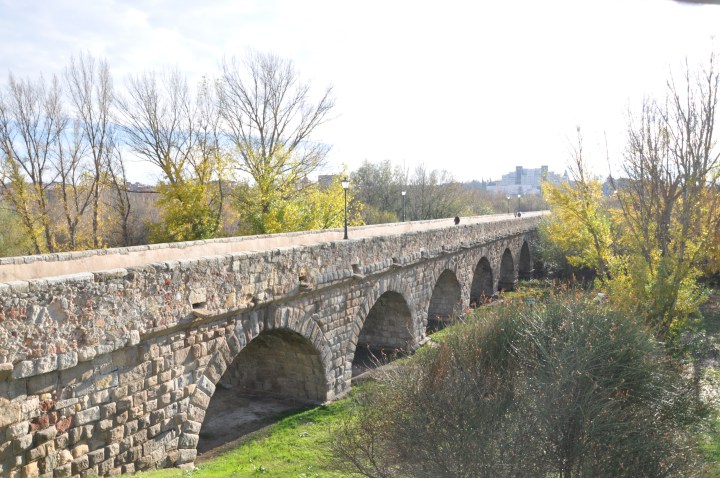
Saímos do “casco antiguo” para ver a ponte romana construída no século III sobre o Rio Tormes.Antes de chegar á ponte do lado esquerdo estava um monumento dedicado a “Lazarillo de Tormes” que é um romance do século XVI narrado na primeira pessoa e que conta a vida de Lazarillo, desde criança até á sua vida adulta. Não se sabem quem a escreveu dizem que pode ter sido um frade de Salamanca e talvez por isso a homenagem.

We left the “casco antiguo” (old town) to see the Roman bridge built in the third century over the Rio Tormes. Before you come to the bridge on the left side there was a monument dedicated to “Lazarillo de Tormes” which is a sixteenth-century novel narrated in the first-person and tell’s the story of Lazarillo’s life, from childhood until his adulthood. No one knows who wrote it some say it may have been a brother from Salamanca and so this tribute.

Continue a ler “Ponte Romana – Salamanca, Espanha”

Palácio Monterrey – Salamanca, Espanha

A inscrição na parede apresenta-nos o Palácio de Monterrey, construído no século XVI com tal grandeza que serviu como inspiração a muitos outros edificios construídos em Espanha.

Um excelente exemplo de um estilo artístico exclusivo do Renascimento Espanhol, o plateresco. Foi propriedade do Conde de Monterrey (que lhe deu o nome) e é actualmente  da Duquesa de Alba, a famosa senhora de 85 anos de quem se diz ser proprietária de metade de Espanha e que é uma das mulheres mais conhecidas no seu país.

The inscription on the wall shows us the Monterrey Palace, built in the sixteenth century with such grandeur that served as an inspiration to many other buildings built in Spain.
An excellent example of a unique artistic style of the Spanish Renaissance, the plateresque. It was the property of the Count of Monterrey (who gave it the name) and is currently owned by the Duchess of Alba, the famous lady of 85 years who they say owns half of Spain and is one of the most famous women in her country.

Continue a ler “Palácio Monterrey – Salamanca, Espanha”

IGLESIA DE LA CLERECÍA – SALAMANCA, ESPANHA

Também conhecida como a Igreja do Espírito Santo, está numa esquina ao lado da Universidade Pontificia e em frente á Casa das Conchas.
Na sua fachada está uma escultura e uma inscrição em homenagem ao Rei e Rainha responsáveis pela construção desta igreja de estilo Barroco. Foi no século XVII e esse rei era Filipe III (também Rei de Portugal) e a sua mulher era Margarida de Áustria. Tal como outras obras feitas por ordem de Reis, Filipe III nunca chegou a ver esta completa uma vez que demorou um século a ficar terminada.


Also known as the Church of the Holy Spirit, it’s in a corner beside the Pontifical University and in front of the House of Shells (Casa das Conchas).
On its facade there’s a sculpture and an inscription in honor of the King and Queen responsible for the construction of this Baroque-style church. It was in the seventeenth century and that was King Philip III (also King of Portugal) and his wife was Margaret of Austria. Like other works done by order of Kings, Philip III never got to see this complete since it took a century to be finished.

Continue a ler “IGLESIA DE LA CLERECÍA – SALAMANCA, ESPANHA”

MESÓN EL CHURRASCO – SALAMANCA, ESPANHA

A oferta gastronómica em Salamanca é bastante boa e os produtos da região são normalmente as estrelas dos pratos, seguramente que haverá outros restaurantes pelas suas ruas com melhor relação preço-qualidade que o Mesón El Churrasco mas mesmo antes de chegar já tínhamos decidido que era aqui que queríamos comer.
The gastronomic offer in Salamanca is very good and the products of the region are often the stars of the dishes, surely there will be other restaurants along its streets with better value for money than the Meson El Churrasco but even before arriving we had already decided that we wanted to eat there.

Não porque vimos na internet um blog ou site que o recomendava, não porque o seu menú tinha óptimo aspecto mas para reviver o bom tempo que passámos aqui há dez anos atrás quando procurávamos um sitio para comer e numa altura em que pouco se pesquisava na internet sobre estes locais. Fomos á aventura e quando pedimos a “parrilla” de carnes os nossos olhos brilharam. Queríamos que eles voltassem a brilhar mesmo sabendo que não íamos comer no melhor restaurante de Salamanca.
O espaço estava na mesma, mas agora a “barra” (balcão) mostrava uma quantidade de tapas com tão boa pinta que quase vacilámos entre prová-las ou pedir a “parrilla” que tão boa memória nos deixou.
Not because we had seen it on an internet site or a blog that was recommending it, not because the menu looked good but to relive the good time we spent here ten years ago when looking for a place to eat and at a time when we did little researching on the internet for these locations. It was an adventure and when we asked the meat parrilla” our eyes gleamed. We wanted them to shine again even knowing we would not eat at the best restaurant in Salamanca.
The space was the same, but now the bar” (counter) showed a number of tapas that looked so good that almost made us falter between tasting them or order the parrilla” that left us such a good memory.


Lá estava ela na ementa a “Parrillada de Carne” para duas pessoas, um pouco mais cara do que nos pareceu nessa altura e nem me lembrava que carnes levava então, mas 22€ por pessoa pareceu-nos exagerado.


Na chapa estava um delicioso “solomillo”, umas costeletas de cordeiro, entremeada, febras e entrecosto. Que saudades.
No final a conta foi pesada, uns 60€ para dois (bom três contando com uma criança que come um prato também) mas sem vinho e sobremesa, creio que pagamos também pela sua localização já que está na Rua Mayor.
There it stood in the menu the Meat Parrillada” for two people, a little more expensive than we thought at that time and didn’t even remember the kinds of meat  it had then but 22 per person it seemed exaggerated.
On the grill there was a delicious solomillo”, some lamb chops, flank, ribs and pork.
In the end the bill was heavy, about 60 for two (well three counting a child eating a dish too) but without wine and dessert, I believe that we also payed for its location as it is in Mayor Street.

Plaza Mayor – Salamanca, Espanha

Por mais vezes que visite Salamanca e entre nesta praça, não consigo deixar de ficar surpreendida pela sua dimensão e beleza. É a terceira vez que a vejo e ainda assim parece que estou ali pela primeira vez. Exploro sem pressa e vou tirando fotos, muitas por sinal.
Para mim é das mais bonitas praças de Espanha (facto: não conheço todas) maior que a de Madrid que é a capital e esta, numa passagem de ano torna-se pequena para albergar tanta gente que nela deixa o ano velho para entrar da melhor maneira no novo.
I can visit Salamanca and this square as many as I can, and I still can’t help but be surprised by its size and beauty. It’s the third time I’ve seen it and yet it seems that I’m there for the first time. I explore it unhurriedly and take pictures, many by the way.
For me it is the most beautiful squares in Spain (fact: I don’t know them all) bigger than that of Madrid that is the capital and in it, in a New Year’s Eve  it becomes small to accommodate so many people that it leaves the old year to get in the new one the best way.

Continue a ler “Plaza Mayor – Salamanca, Espanha”

SINAGOGA SANTA MARIA LA BLANCA – TOLEDO, ESPANHA

Primeiro Sinagoga depois Igreja, Santa Maria a Branca continua a ser um excelente exemplo do movimento mudéjar em Espanha.

O exterior não denuncia a riqueza do seu pequeno interior, que conta com cinco naves separadas por arcos com um formato de ferradura e cuja ligação ao pilar se faz com um detalhe decorativo esculpido em pedra.

First a Synagogue then a church, Santa María la Blanca continues to be an excellent example of the Mudéjar movement in Spain.
The exterior does not denounce the wealth of its small interior, which has five naves separated by arches with a horseshoe shape and whose connection to the pillar is made with a decorative detail carved in stone.

Continue a ler “SINAGOGA SANTA MARIA LA BLANCA – TOLEDO, ESPANHA”