Ponte Vecchio – Florença, Itália

8611723102_c236cd7da6_h
A Ponte Vecchio foi o primeiro monumento que vimos em Florença, caminhámos quase 1,5km junto ao rio Arno para poder vê-la e a expectativa era grande. Só tivémos pena de uma coisa, faltou o sol. Pode não ser tão monumental como o Duomo mas o facto de estar ali desde o século XIV já te impressiona.
The Ponte Vecchio was the first monument we saw in Florence, we walked almost 1.5 kilometers along the river Arno to be able to see it and the expectation was great. We were only sorry about one thing, it wasn’t a sunny day. It may not be as monumental as the Duomo but the fact that it is since the XIV century does impress you.
Continue a ler “Ponte Vecchio – Florença, Itália”

Duomo – Florença, Itália

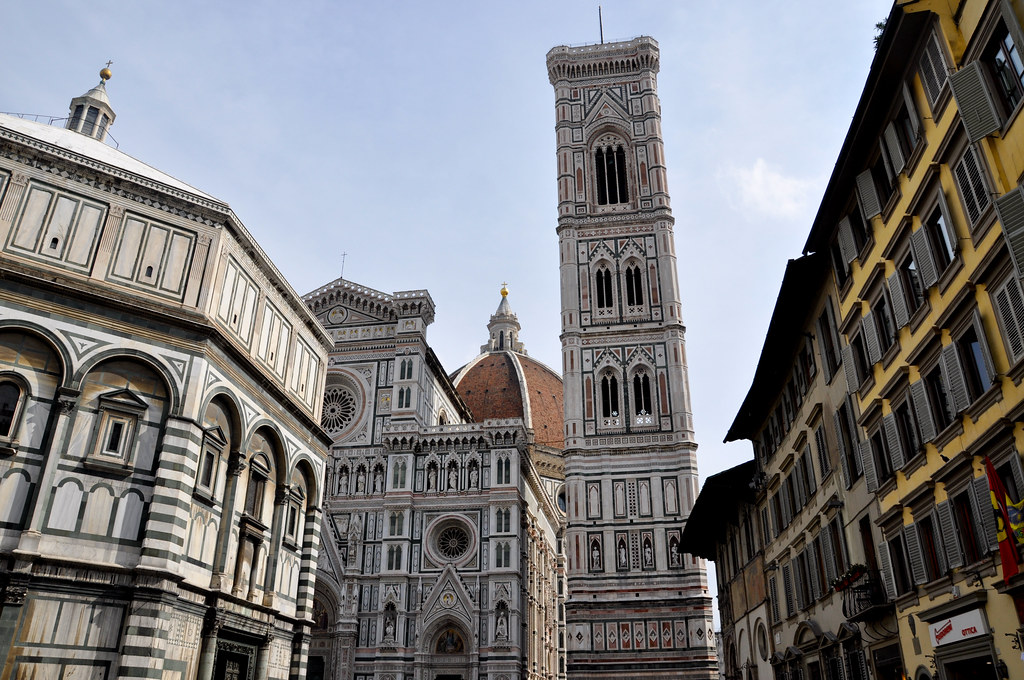
Semana Santa. Chegámos ao hotel, deixámos as malas no hotel e partimos em busca dos primeiros síntomas de Síndrome de Stendhal. Passámos na Ponte Vecchio, fantástica mas o ritmo cardíaco continua normal. Seguimos a multidão em busca do Duomo e assim que vês o seu campanario lá começa o coração a acelerar. Dizem que tamanha beleza pode provocar um desmaio, mas nem o imaginas porque queres aproveitar cada segundo para analizar cada milímetro da mais fantástica obra feita em mármore.
Holy Week. We reached the hotel, we left our bags there and set off in search of the first symptoms of Stendhal Syndrome. We passed on the Ponte Vecchio, it was fantastic but the heart rhythm remains normal. We followed the crowd in search of the Duomo and as son as you see the bell tower the heart starts accelerating. They say that such beauty can cause fainting, but you can’t even imagine it because you want to enjoy every second analyzing every millimeter of the most fantastic work done in marble.

Continue a ler “Duomo – Florença, Itália”

Catedral de San Pietro – Bolonha, Itália

Percorríamos a Via da Independência quando vimos a grande fachada de uma igreja e decidimos entrar. Tínhamos ido até Bolonha sem mapa, sem referências, sem nada…íamos á descoberta e foi assim que encontrámos a catedral da cidade, passeando casualmente por uma rua…Ao entrar percebemos que afinal era mais que uma igreja era a Catedral de Bolonha dedicada a São Pedro.

We walked the Via de la Independencia when we saw the great facade of a church and decided to enter. We had gone to Bologna without a map, without references, without anything … we went to the discovery and that is how we found the cathedral of the city, strolling casually along a street … On entering we realized that after all it was more than a church was the Cathedral of Bologna dedicated to Saint Peter.

Continue a ler “Catedral de San Pietro – Bolonha, Itália”

Piazza Farnese – Roma, Itália

Passeávamos pelo Campo di Fiori quando sem olhar para o mapa entrámos por uma rua que nos levou até a esta praça. Sabíamos que era uma praça importante mas depois de ler a placa tivémos a confirmação: Farnese, uma das mais influentes e poderosas famílias de Itália.
E o seu nome vem do Palácio Farnese que está ao centro da praça e é a sua principal atracção. A sua construção foi ordenada pelo Cardeal Alessandro Farnese (que mais tarde viria a ser Papa) a 1514 e Antonio da Sangallo foi quem iniciou a obra mas morreu antes de a ver terminada. É por esse motivo que Michelangelo entra no projecto.
We were walking along Campo di Fiori when, without looking at the map, we entered a street that led us to this square. We knew it was an important square but after reading the plaque we had confirmation: Farnese, one of the most influential and powerful families in Italy.
And its name comes from the Farnese Palace which is in the center of the square and is its main attraction. Its construction was ordered by Cardinal Alessandro Farnese (who later became Pope) in 1514 and Antonio da Sangallo was the one who initiated the work but died before it was finished. This is why Michelangelo enters the project.

Continue a ler “Piazza Farnese – Roma, Itália”

PUNTA DELLA DOGANA – VENEZA, ITÁLIA

No guia Lonely Planet de Veneza há um Top 10 de coisas para ver (ou fazer) e a oitava é a Punta Della Dogana. E é só até visitares Veneza que entendes bem porquê, até lá ficas com a ideia que há muito mais coisas interessantes que ver que a zona da antiga alfândega da cidade. Este pequeno triângulo que assiste ao encontro de dois canais: o Grand e o Giudecca tornou-se num dos centros culturais e artísticos mais interessantes.

In the Lonely Planet guide of Venice there is a Top 10 things to see (or do) and the eighth is the Punta Della Dogana. And it’s only until you visit Venice you understand why, you stay up there with the idea that there are many more interesting things to see that the area of ​​the ancient customs of the city. This small triangle is the place where two channels meet: the Grand and Giudecca became one of the most interesting art and cultural centers.

Continue a ler “PUNTA DELLA DOGANA – VENEZA, ITÁLIA”

PONTE DE RIALTO, VENEZA, ITÁLIA

Fazendo um apanhado das imagens mais emblemáticas que vi de Veneza antes de a visitar, podemos sempre ver as gôndolas, a Piazza di São Marco com a Basilica, várias do Grand Canal e claro, a Ponte de Rialto. Esta ponte em forma de arco é uma das mais antigas e também um dos símbolos de Veneza.
Pareceu-me que ela é a grande embaixadora da essência do passado (e presente) mercantil da cidade, porque não servia apenas de passagem ou para ligar dois bairros da cidade, ao passar por ela entramos num pequeno centro comercial com lojas de um lado e do outro.
If I think about the most notorious images I saw of Venice before visiting you could always see the gondolas, the St. Mark’s square and the Basilica, lots of pictures of the Grand Canal and of course, the Rialto Bridge. With arch shape it is one of the oldest of this city and also one of it’s icons.
It looked to me as she represented the essence of the merchant past (and present) of the city, it wasn’t just used to connect the two sides of the Grand Canal, passing through it we get in a small shopping centre with stores on both sides.

Continue a ler “PONTE DE RIALTO, VENEZA, ITÁLIA”

Monte Palatino – Roma, Itália

É uma das sete colinas de Roma e faz parte do seu conjunto arqueológico mais relevante, juntamente com o Coliseu e o Fórum Romano. Uma vez mais utilizámos o Roma Pass para entrar e o acesso ao Monte permite também visitar o Fórum.
Para nós a visita ao Palatino representou uma agradável surpresa, entre as sombras proporcionadas pelo seu abundante arvoredo, a espantosa vista que proporcionava para outros monumentos como o Circo Massimo, o Forum Romano e até o Coliseu, para além de toda a sua riqueza histórica porque afinal aqui viviam os imperadores de Roma, tudo somado temos uma das melhores experiências da cidade.
 
It is one of the seven hills of Rome and is part of an archaeological group of high importance, along with the Colosseum and the Roman Forum. Once again we used the Roma Pass to get in and access to Monte that also allows you to visit the Forum.
For us the visit to the Palatine was a pleasant surprise, the shadows given by its abundant trees, the amazing sight that provided to other landmarks such as the Circus Maximus, the Roman Forum and the Colosseum, beyond all its historical richness because after all here lived the emperors of Rome, all in all we have had one of the best experiences in town.

Continue a ler “Monte Palatino – Roma, Itália”

Fórum Romano – Roma, Itália

Com uma entrada apenas, cortesia do Roma Pass visitámos o Palatino e o Fórum Romano. Tanto um como o outro são um verdadeiro desafio para entender o que estamos a ver, aqui o aconselhável é levar um bom guia, a Lonely Planet por exemplo tem um dentro do guia de Roma que ajuda a entender melhor o que estamos a ver quando olhamos para alguma ruína do Fórum Romano.

With only one ticket, courtesy of Roma Pass visited the Palatine and Roman Forum. Both one and the other are a real challenge to understand what we are seeing here is the advisable to take a good guide, Lonely Planet has an example within the Rome guide that helps you better understand what we see when we look at a ruin of the Roman Fórum.


Continue a ler “Fórum Romano – Roma, Itália”

Praça do Capitólio – Roma, Itália

Mais uma famosa praça de Roma, desta vez no Monte Capitolino entre o Forúm Romano e o antigo Campo de Marte.

No século XVI, por ordem do Papa Paulo III, Miguelangelo criou esta agradável praça que podemos contemplar depois de subir a Cordonata. No topo dessa mesma Cordonata, duas estátuas de Dioscuri, dois gémeos Castor e Pólux que apesar de terem a mesma mãe são de pais diferentes. A mãe era Leda, mulher de Tíndaro (Rei de Esparta) e foi seduzida por Zeus pai de Pólux.

Another famous square of Rome, this time in the Capitoline Hill between the Roman Forum and the ancient Campus Martius.
In the sixteenth century by order of Pope Paul III, Michelangelo created this pleasant square which we can contemplate after climbing the Cordonata. On top of that Cordonata, two statues of Dioscuri,the twins  Castor and Pollux that despite having the same mother are from different fathers. The mother was Leda, wife of Tyndareus (King of Sparta) and was seduced by Zeus father of Pollux.


Continue a ler “Praça do Capitólio – Roma, Itália”

Praça e Escadaria de Espanha – Roma, Itália

6551286587_c481c02e92_b
Depois de visitar a Piazza di Popolo e passar pela Via Babuíno chegamos a mais uma famosa praça de Roma, a Praça de Espanha ou Piazza di Spagna. Na realidade ficámos surpreendidos porque a praça é bastante grande e não se resume apenas á zona da grande escadaria que é a mais conhecida sem dúvida.
Os famosos degraus ligam a Praça de Espanha á Praça de la Trinitá dei Monti, onde está uma igreja com o mesmo nome, de estilo renascentista e cuja construção data do século XVI. Já escadaria foi construída dois séculos mais tarde e o arquitecto foi o Francesco di Santis.
 
After visiting the Piazza di Popolo and Via Babuíno we go through one the most famous squares of Rome, Piazza di Spagna and it’s Spanish steps. In fact we were surprised because the place is quite large and is not just about the grand staircase area which is undoubtedly the best known.
The famous stairs linking the Spanish Square with Trinitá la dei Monti, where a church with the same name is, with a Renaissance-style and it’s building dating from the sixteenth century. The staircase was built two centuries later and by the architect Francesco di Santis.