Basílica Santa Maria Novella – Florença, Itália

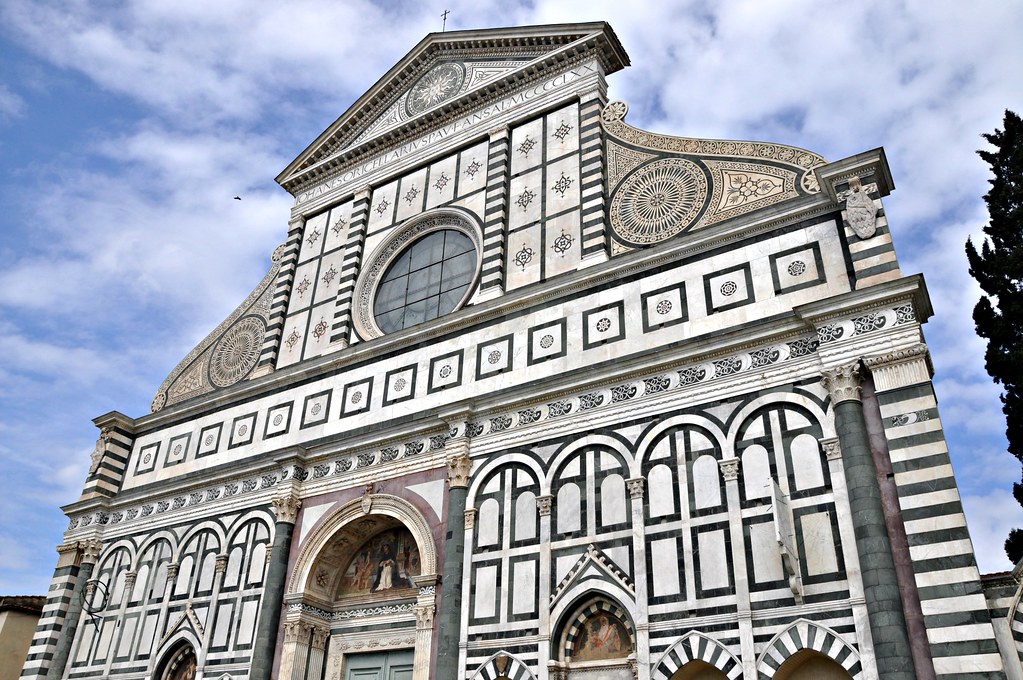
Regresso aos posts sobre Florença, ainda tenho muito mais que contar sobre esta cidade. Queria muito escrever sobre esta basílica porque foi a minha igreja preferida e mesmo ao editar as fotos tinha os pelos em pé ao reviver a sensação de a ter visitado. O Duomo é fantástico por fora mas Santa Maria Novella não tendo a mesma dimensão e grandeza exterior, esconde no seu interior autênticas riquezas que o interior do Duomo jamais conseguirá alcançar.

I return to the posts about Florence, I still have much more to tell about this city. I really wanted to write about this basilica because it was my favorite church and even as I was editing the potos I was thrilled to relive the feeling of having visited it.
The Duomo is fantastic on outside but Santa Maria Novella although it doesn’t have the same size and grandeur exterior, hides inside  riches that the interior of the Duomo will never be able to achieve.

Continue a ler “Basílica Santa Maria Novella – Florença, Itália”

do: ERMITA DE S.JUAN BAUTISTA E IGLESIA DE S. FRANCISCO – PUERTO DE LA CRUZ, ESPANHA

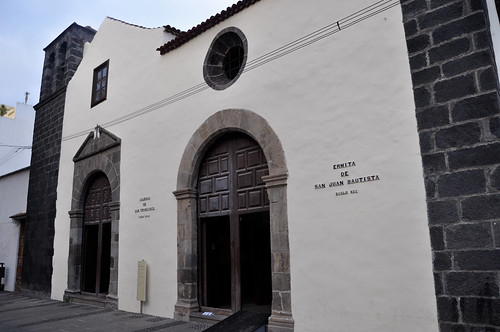
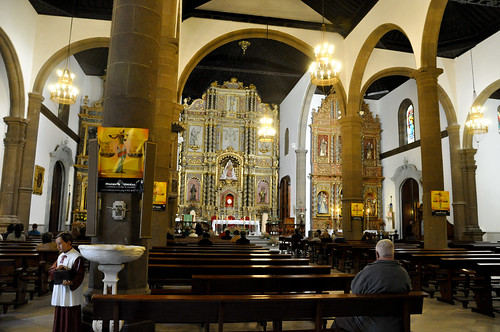
Não poderia fazer um post da Ermida separada da Igreja porque na realidade essa separação não existe. São duas portas, dois nomes diferentes mas ao entrar podes ver as duas. Não encontrei muito informação sobre elas mas do que pude ler faziam parte de um convento franciscano, antes disso a Ermida tinha sido dedicada a S. João Baptista.
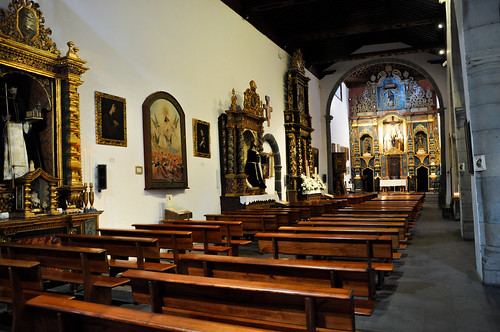
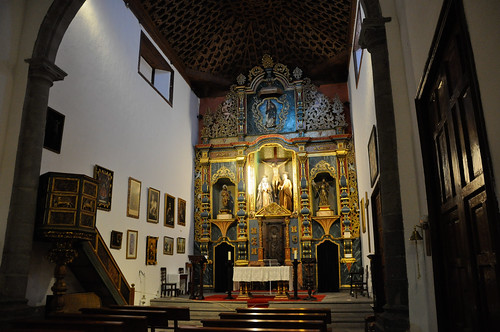
Foram construídas nos séculos XVI e XVII e no seu interior podemos ver alguns dos retablos mais bonitos da ilha.
 
I could not make a separate post of the Chapel and the Church because in reality there is no such separation. There are two doors, two different names but upon entering you can see both. I did not find much information about them but from what I read  they were part of a Franciscan convent, before that the Chapel was dedicated to S. Juan Bautista.
They were built in the sixteenth and seventeenth centuries and inside we can see some of the island’s most beautiful altarpieces.

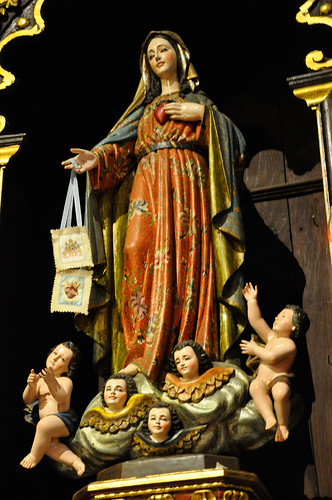
Gostei muito desta igreja mesmo depois de ter visitado a Igreja de N.S. de la Peña de Francia que é a principal de Puerto de la Cruz. Ainda que pequena os seus retablos trabalhados, os quadros que os decoram e as imagens de alguns Santos como o do próprio S. João Baptista fazem valer a pena a visita.
 
I really liked this church even after visiting the church Our Lady of la Peña de Francia that is the main one of Puerto de la Cruz. Although it was small it’s small decorated altarpieces, the paintings used in them and the images of some Saints like it’s own S. Juan Bautista make it worth the visit.


Mais/More posts:

do: IGLESIA N.S. DE LA PEÑA DE FRANCIA – PUERTO DE LA CRUZ, ESPANHA

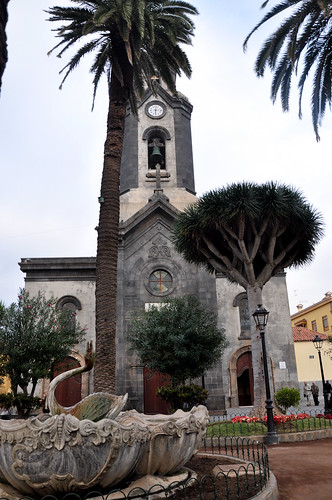
Quem a vê de fora não diría que é do século XVII, parece na realidade mais recente e talvez seja a sua torre construída no final do século XIX que nos leve a pensá-lo. Não entrei pela porta principal e mesmo assim fui logo surpreendida pelos três altares que se dividem pelas três naves da igreja. O que tinham de comum era a riqueza do trabalho decorativo para além de varias figuras importantes veneradas pela gente do Puerto de la Cruz.
 
Who sees it wouldn’t problaby say it’s from the seventeenth century, in reality in looks more recent and perhaps it is it’s tower built in the late nineteenth century that leads us to think so. I did not go through the front door and even I was surprised by the three altars that divide the three naves of the church. What they had in common was the rich decorative work in addition to several important figures venerated by the people of Puerto de la Cruz.

O altar-mor decorado com estilo barroco tem como figura central a Santa que dá o nome á igreja, N.S. de la Peña de Francia. Num outro retablo a figura da Virgen de la Carmen, uma das mais veneradas pelos portuenses, colocada num retablo do século XVIII também ele decorado ao estilo barroco.
A entrada na igreja é gratuita e não tirei muito mais fotografías no seu interior porque entrei na hora da oração. Os seus retablos são sem dúvida a sua maior riqueza.
 
The main altar is decorated with baroque style, it has as the central figure the Saint that gives the name to the church, NS de la Peña de Francia. In another altarpiece the figure of Virgen de la Carmen, one of the most venerated by the “portuenses” (locals), placed in an eighteenth-century altarpiece also decorated in baroque style.
Admission is free and I did not take much photographs inside because I visited at a hour of prayerIt’s altarpieces are undoubtedly its greatest asset.
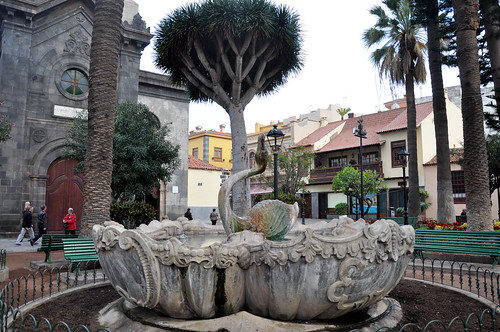
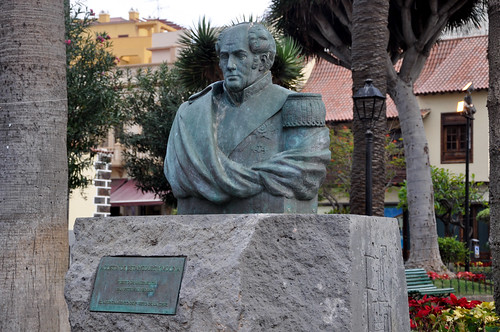
Em frente á igreja está um pequeno jardim cuja peça central é a sua fonte com uma escultura de um cisne. Junto ás escadas que dão acesso á Calle Quintana está uma escultura de Agustín de Betancourt y Molina, que nasceu nesta parte da ilha de Tenerife e cujos antepassados estão ligados á sua colonização. Foi um brilhante engenheiro que para além de Espanha também viveu na França e na Rússia.
 
In front of the church there is a small garden whose centerpiece is a fountain with a sculpture of a swan. Standing by the stairs that give access to Calle Quintana is a sculpture of Agustín de Betancourt y Molina, who was born in this part of the island of Tenerife and whose ancestors are linked to its colonization. It was a brilliant engineer who besides Spain also lived in France and Russia.


Mais/More posts:

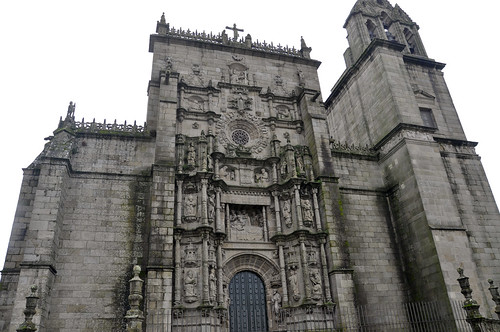
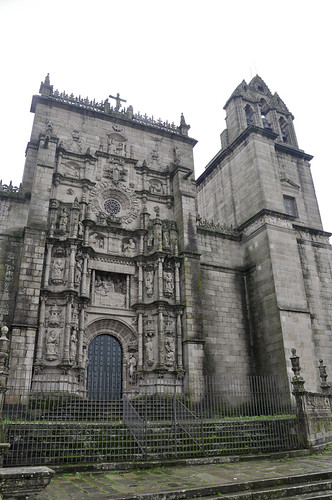
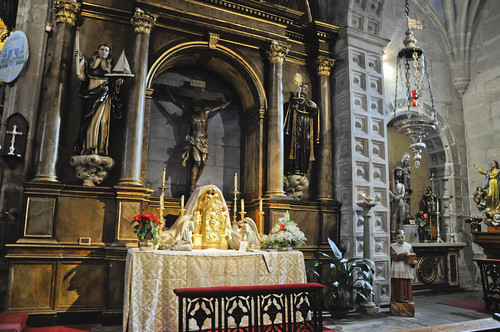
do: BASÍLICA DE SANTA MARIA – PONTEVEDRA, ESPANHA

Fazendo o Caminho Português para Santiago que passa pelo centro histórico de Pontevedra começámos a ver as pequenas placas que indicavam o caminho para a Real Basílica de Santa Maria a Maior.
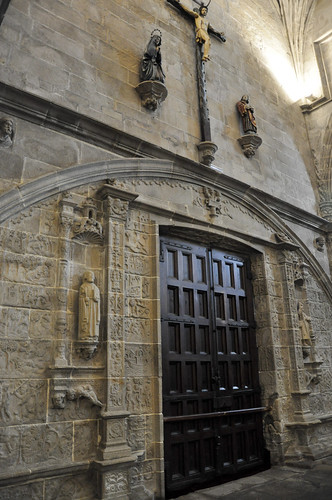
A sua construção no século XVI foi promovida por um grémio de marinheiros do bairro da Moureira. No seu interior a imagem do Santo Cristo del Buen Viaje era paragem obrigatória antes de partirem nos seus barcos.

Following the Portuguese Way to Santiago passing through the historic center of Pontevedra we started to see small signs indicating the way to the Royal Basilica of St. Mary Major.
Its construction in the sixteenth century was promoted by a guild of sailors from the Moureira neighborhood.Inside the image of the Santo Cristo del Buen Viaje was a mandatory stop before heading to their boats.

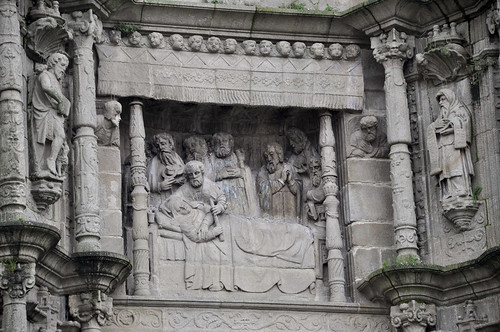
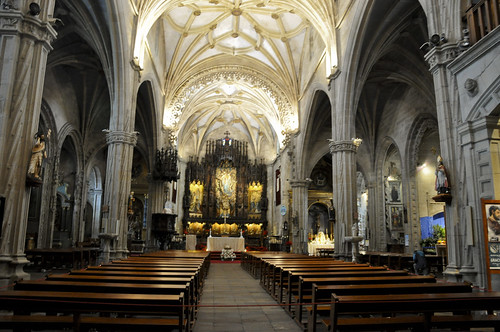
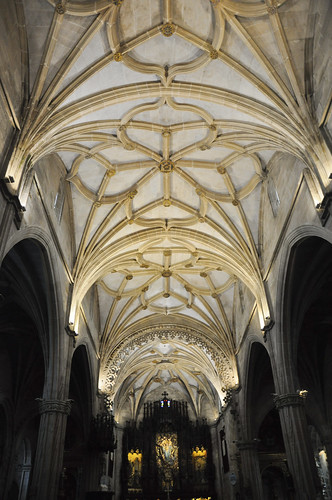
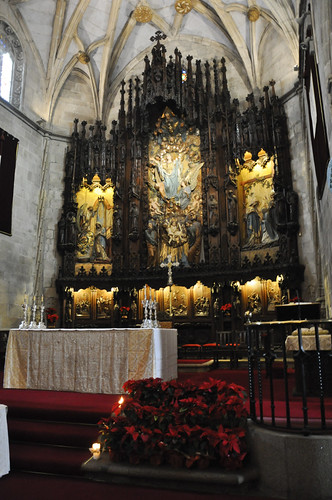
Há uma mistura de estilos gótico (tardio) e renascimento sendo a fachada principal do estilo plateresco criada por um português João Nobre e por Cornelis de Holanda. No seu interior podemos ver o tecto decorado que foi do que mais gostei na Basílica assim como a luminosidade que realça o retablo colocado no altar.

There is a mix of Gothic (Late) and Renaissance being the main facade of plateresque style created by a Portuguese by John Noble and Cornelis de Holanda. Inside we can see that the decorated ceiling it’s what I liked most in the Basilica as well as the light enhancing   the altarpiece placed on the altar.


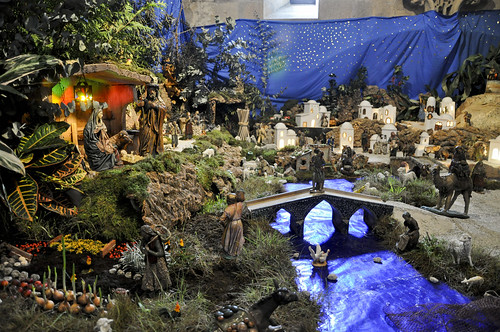
Visitar igrejas na época do Natal significa ver montado o Presépio ou o Belén (em espanhol). Na maioria dos casos são grandiosas e detalhadas representações de Belém e procuram ser uma réplica do local sagrado onde nasceu Jesus. Por isso há lagos, casinhas iluminadas, pessoas, animais, rios, pontes, hortas, moínhos, etc..

Visiting churches at Christmas time means seeing assembled the Nativity set or Belén (in Spanish). In most cases they are great and detailed representations of Bethlehem and seek to be a replica of the holy site where Jesus was born. So there are lakes, lighted houses, people, animals, rivers, bridges, gardens, mills, etc. ..
Mais sobre/More about:

do: IGREJA DA PEREGRINA – PONTEVEDRA, ESPANHA

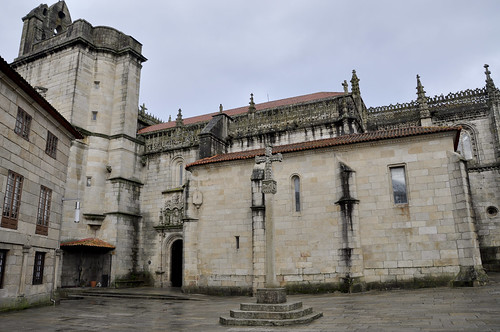
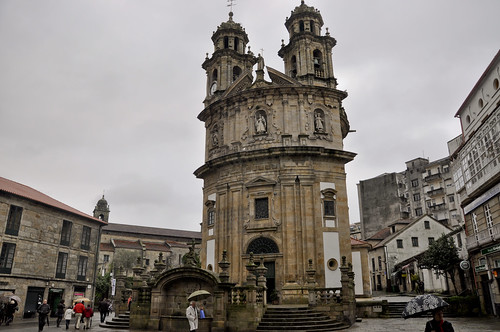
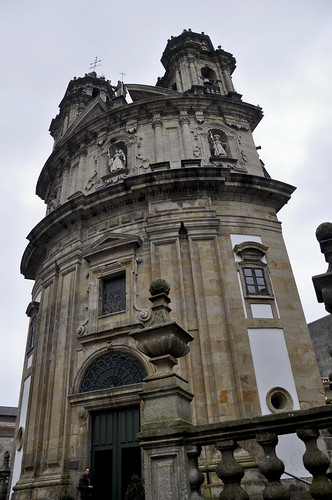
Numa competição das igrejas mais bizarras da Europa esta seguramente estaria no Top 10. Quando a vês da praça com o mesmo nome pensas que não está terminada que só fizeram a fachada e aos poucos enquanto andas vai revelando a sua forma. Dizem que é de inspiração Portuguesa e é um dos monumentos que marca o Caminho Português para Santiago que passa mesmo no coração de Pontevedra.
 
In a bizarre competition ofchurches of Europe this surely would be in the Top 10. When you see it from the square with the same name you think it might not be finished that they only did the façade and slowly as you walk will reveal its shape. They say it’s of portuguese inspiration and it is one of the monuments that marks the Portuguese Camino to Santiago that goes through the very heart of Pontevedra.

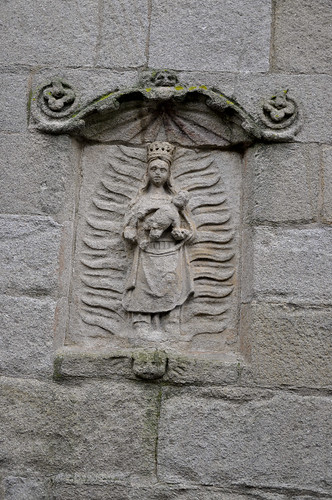
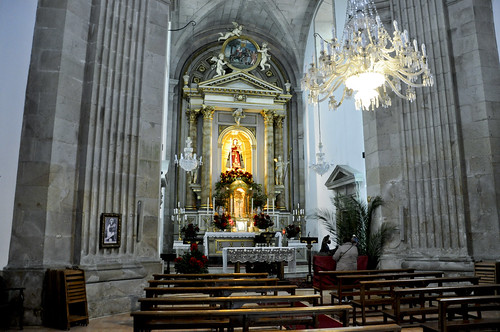
É também conhecida por Capela ou Santuário da Virgem Peregrina ou Virxen Peregrina em galego. Foi construída no século XVIII nos estilos barroco e neo-clássico e no seu interior está a figura da Virgem Peregrina ou do Caminho num altar ao centro.
Não é muito grande e não tem grandes decorações mas o seu significado para os peregrines trascende tudo isto, foi a partir deste ponto que começámos a percorrer Pontevedra seguindo o trilho do Caminho Português.
A entrada é livre.
 
It is also known as Chapel or Shrine of the Virgin Peregrina or Virxen Peregrina in Galician. It was built in the eighteenth century with a baroque and neo-classical  style and inside there’s the figure of the Virgin of the Pilgrim or the Camino in the center altar.
Not too big and without great decorations but its significance for the pilgrims transcends all this, it was from this point that we started to visit Pontevedra following the trail of the Portuguese Camino.
Admission is free.


Mais sobre/More about:

BASÍLICA DO SANGUE SAGRADO – BRUGES, BÉLGICA

Ao visitar Bruges ficámos com o mesmo sentimento que vários turistas que por ela passam: é única! Pelo menos assim parece, não percorri o mundo o suficiente para o ter mais claro mas a verdade é que em cada monumento que entrávamos na cidade ficávamos surpreendidos isto para não falar na sua beleza exterior já amplamente conhecida.
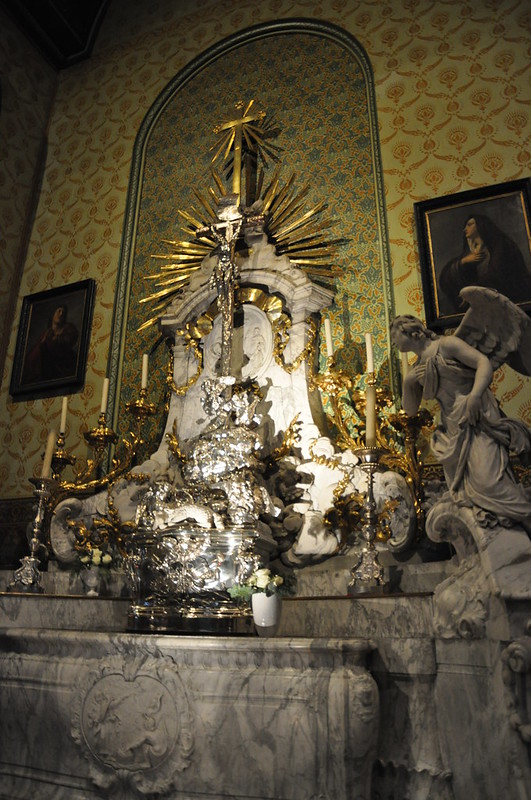
A Basílica do Sangre Sagrado é um desses exemplos, surpreende-te! E se não sabes ao que vais mais ainda…são duas igrejas numa só, uma sombria e despida de grandes decorações, a outra que te deixa o tom dourado na cabeça, rica em decoração e a guardiã de uma preciosidade do mundo cristão: uma pedaço de tecido que (supostamente) contém o sangue de Cristo.
When visiting Bruges we were left with the same feeling of many tourists who pass by it: it is unique! At least so it seems, we didn’t travel the world enough to have it more clear but the truth is that in every monument we entered the city we were surprised not to mention in it’s  outer beauty already widely known.The Basilica of the Holy Blood is one of those examples, it surprised us! And if you do not know what you’re going into even better  it’s two churches in one, a dark and devoid of great decorations, the other one that leaves the gold color in your head, rich in decor and the guardian of a treasure from the Christian world: a piece of fabric that (supposedly) contains Christ’s blood.

O mais interessante é que olhas do lado de fora, vês a sua fachada e dizes: “Vou entrar porque me parece interessante” e é! Vale a pena uma visita.
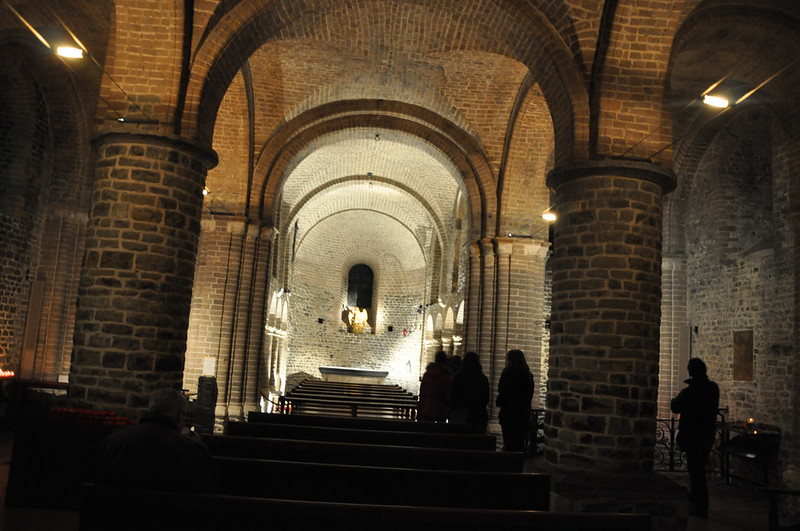
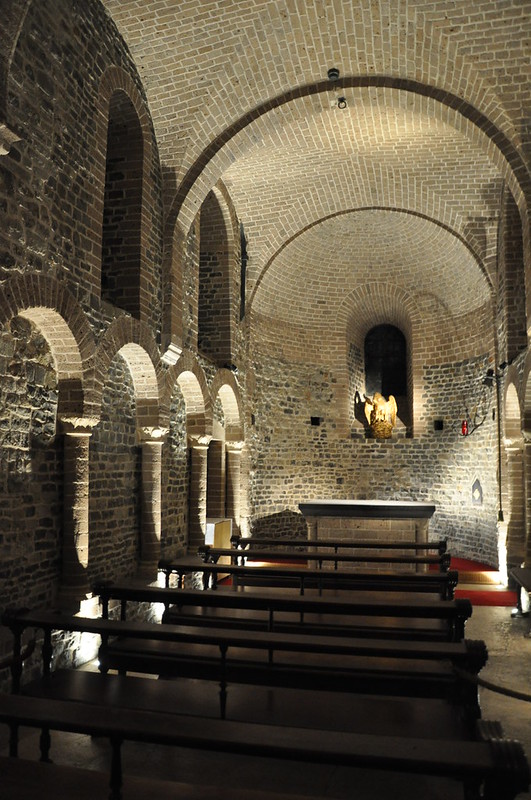
No piso inferior está a capela de estilo românico construída no século XII, muito simples e fria. É dedicada a S. Basílio de Cesareia.

The most interesting is that you look from outside, you see the façade and say: I’m going in because it seems interestingand it is! Well worth a visit.Downstairs there is the Romanesque chapel built in the twelfth century, very simple and cool. It is dedicated to St Basil of Caesarea.

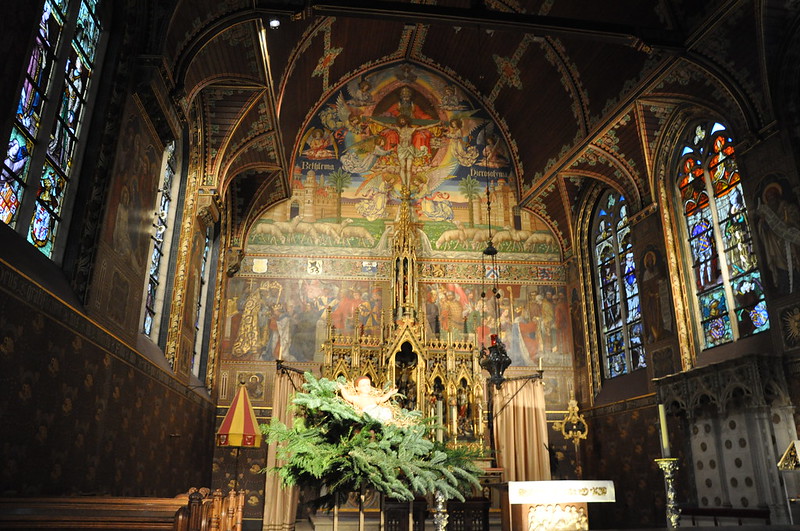
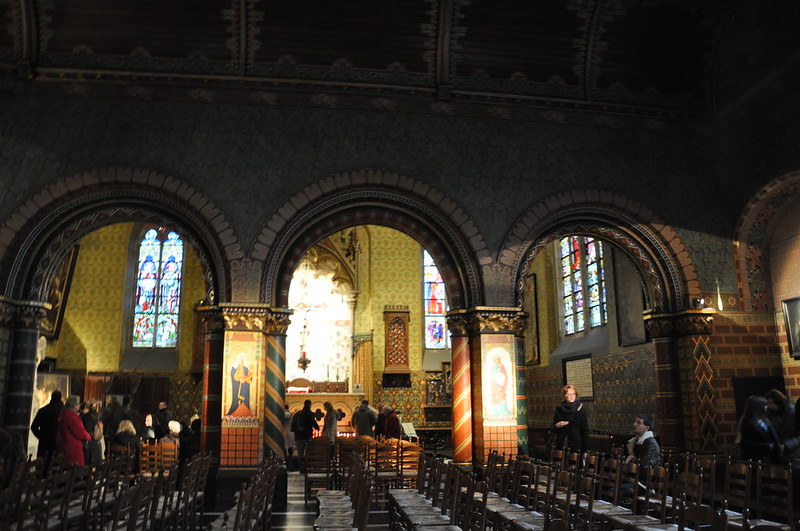
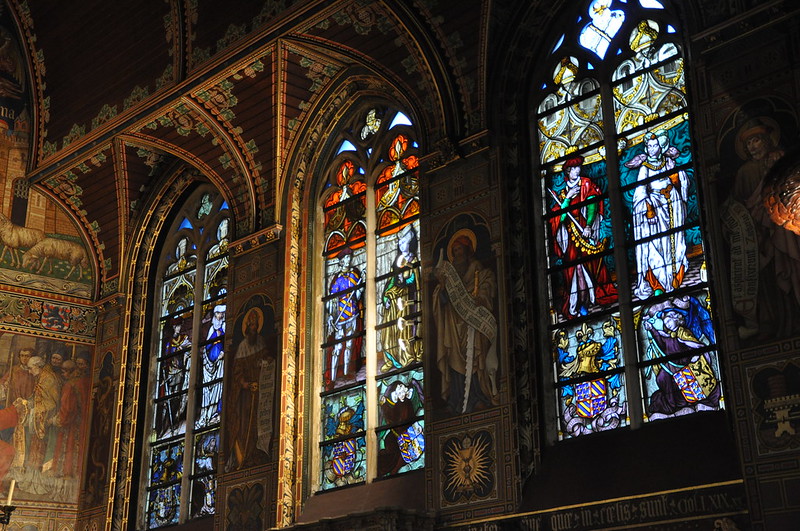
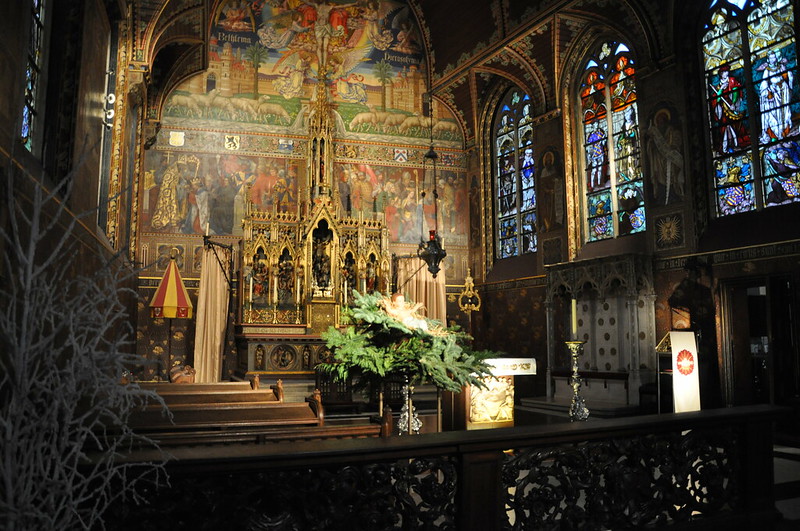
No nível superior está a Capela do Sangue Sagrado construída no século XVI com um estilo gótico e remodelada no século XIX. Nada é simples na sua decoração, apesar de pequena a capela é rica em detalhes desde o púlpito ao altar, passando pelos vitrais e colunas decoradas com frescos.

At the top level is the Chapel of the Holy Blood built in the sixteenth century with a Gothic style and remodeled in the nineteenth century. Nothing is simple in it’s decor, despite being small the chapel is rich in details from the pulpit to the altar, the stained glass windows and columns decorated with frescoes.

Um tabernáculo de prata guarda a grande “jóia” da capela, um frasco que contém um pedaço de tecido com que José de Arimateia limpou o sangue do corpo de Cristo que ele ajudou a retirar da cruz. Para ver a reliquia há horários específicos em que a mostram, os guias dizem que é todas as 6ªfeiras em dois turnos, 10h e 15h.

A silver tabernacle holds the great “jewelof the chapel, a bottle containing a piece of cloth that Joseph of Arimathea wiped blood from Christ’s body that he helped to remove from the cross. To see the relic‘s there are specific times where they show it, the guides say it’s  every Friday in two shifts, 10h and 15h.
Our guide of:

http://hojeconhecemos.blogspot.com.es/2001/03/guia-de-bruges.html

IGREJA DE NOSSA SENHORA – BRUGES, BÉLGICA

A primeira coisa que chama a atenção na Igreja de Nossa Senhora (Onze-Lieve-Vrouwekerk) é a sua torre de 122 metros de altura, a mais alta de Bruges. A sua construção começa a 1220 e só termina duzentos anos mais tarde.
Originalmente com uma construção de estilo românico, o resultado final é predominante gótico pelo tempo que levou a construir. Entramos por uma lateral e ao chegar á nave central podemos ver o seu trabalhado altar e por trás os túmulos de Carlos, Duque de Borgonha (o Audaz). Foi o último duque de Valois e ao seu lado, a sua filha Maria, Duquesa de Borgonha. 
 
The first thing that stands out in the Church of Our Lady (Onze-Lieve-Vrouwekerk) is its tower of 122 meters high, the highest of Bruges. Its construction begins in the year 1220 and only ends two hundred years later.
Originally with a Romanesque building, the end result is the predominant Gothic by the time it took to build. We entered through a side and arriving at the nave you can see it’s elaborate altar and behind it the graves of Charles, Duke of Burgundy (the Bold). It was the last Valois Duke of and beside her, his daughter Mary, Duchess of Burgundy.

Continue a ler “IGREJA DE NOSSA SENHORA – BRUGES, BÉLGICA”

Igreja Sant Feliu – Girona, Espanha

A placa que a identifica diz que é a construção gótica mais representativa de Girona. É dedicada a S. Félix (ou S. Feliu em catalão), há dúvidas sobre o seu local de nascimento, dizem que foi em Itália e terá sido um mártir que morreu na cidade espanhola.
A igreja está localizada numa simpática praça com o mesmo nome, á volta dela cafés/restaurantes com esplanada tornam o espaço muito agradável e seguramente que de noite será um dos locais de eleição para comer ou tomar um copo com vista para a imponente fachada onde se destaca a sua torre campanário desenhada por Pere Sacoma o mesmo da Catedral de Sta. Maria que também podemos ver na cidade.
The plaque that identifies it says it is the most representative Gothic building of Girona. It is dedicated to St Félix (or S. Feliu in Catalan), there are doubts about his birthplace, some said it was in Italy and he was a martyr who died in this spanish city.
The church is located in a nice square of the same name, around it cafes / restaurants with outdoor seating make the space very pleasant and surely that in the evening it is one of the favorite spots to eat or drink overlooking the imposing façade that it’s main highlight is the bell tower designed by Pere Sacoma the same from the Cathedral of St. Mary that we can also see in the city.

Continue a ler “Igreja Sant Feliu – Girona, Espanha”

Basílica de Sacre Coeur – Paris, França

7514847016_cbb1c1f94f_h
Guardámos para o fim a visita á Basílica do Sagrado Coração que está no topo de Montmartre e dedicámos uma manhã a fazê-lo. Há muito mais para fazer que simplesmente visitá-la, todo o seu entorno convida a ficar um pouco mais, queremos sentar-nos na relva a comer uma sandes enquanto vemos as pessoas a passar, ou ficar a apreciar os originais artistas de rua que por ali andam.
We’ve saved for last a visit to the Sacre Coeur that is at the top of Montmartre and we devoted a morning to do so. There is much more to do than just visit it, all it’s surroundings invites you to stay a little longer, we wanted to sit down on the grass and eat a sandwich while watching people pass by, or appreciate the unique street performers that are there.

Continue a ler “Basílica de Sacre Coeur – Paris, França”

do: IGREJA SANTIAGO DEL BURGO – ZAMORA, ESPANHA

Vemos a Igreja de Santiago del Burgo a partir da Plaza de la Constituición e decidimos entrar para conhecer. Antes ainda vimos a placa de descrição do monumento que sendo pequeno tem uma das melhores placas explicativas que já vi assinalando com cores o século de construção de cada parte desta igreja. Também por essa placa ficámos a saber que não é claro o século em que foi construída se bem que eles dizem que é do XII mas poderia ter sido de finais do XI.
 
We saw the Santiago del Burgo Church from the Plaza de la Constituición (Constitución Square) and we decided to get in. Before we saw it’s description sign and although it is a small church it is one of the best information signs I’ve seen because it marks with colors the century each part was built.
Also through that sign we saw that it was not clear in which century it was first built, they mark it as from the XII century but it could have been from the end of the XI.


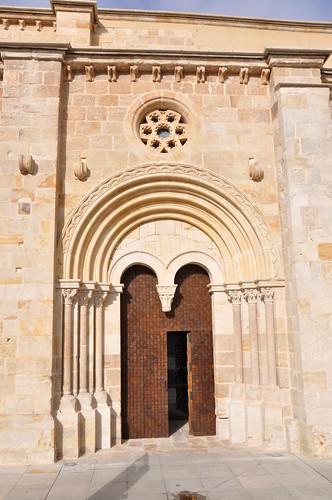
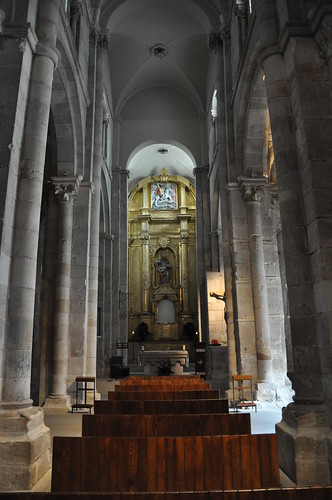
De estilo românico, é a única igreja para além da catedral que manteve a distribuição de três naves com alturas distintas. A torre foi adicionada pouco depois da sua construção inicial no século XII e foi reparada séculos mais tarde. O seu interior é simples com pequenas capelas, alguns quadros e um altar pequeno. A entrada é gratuita.
 
Built in a romanesque style, it is the only church besides the cathedral that has mantain it’s three naves with different hights. The tower was added soon after it’s initial building in XII century and repared many years later. Inside it is quite simple with little chapels, some paintings and small altar. The entrance is free.


More posts about Zamora: