STADHUIS – BRUGES, BÉLGICA

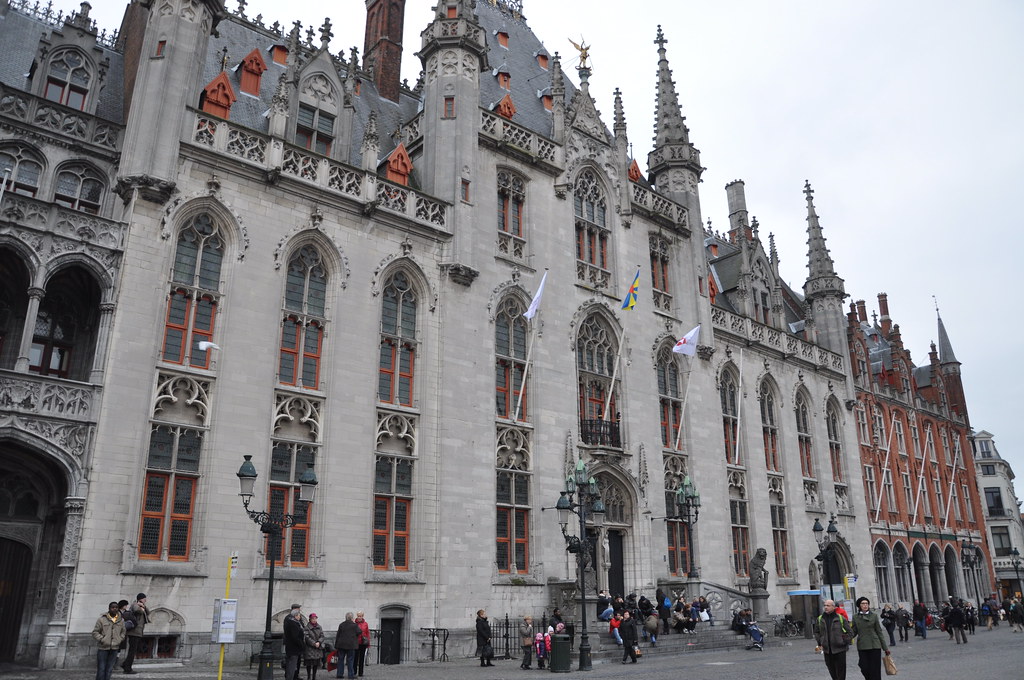
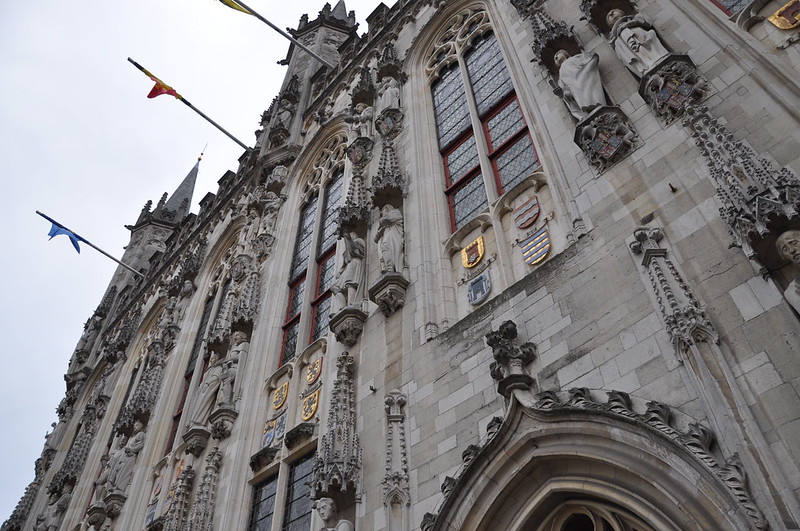
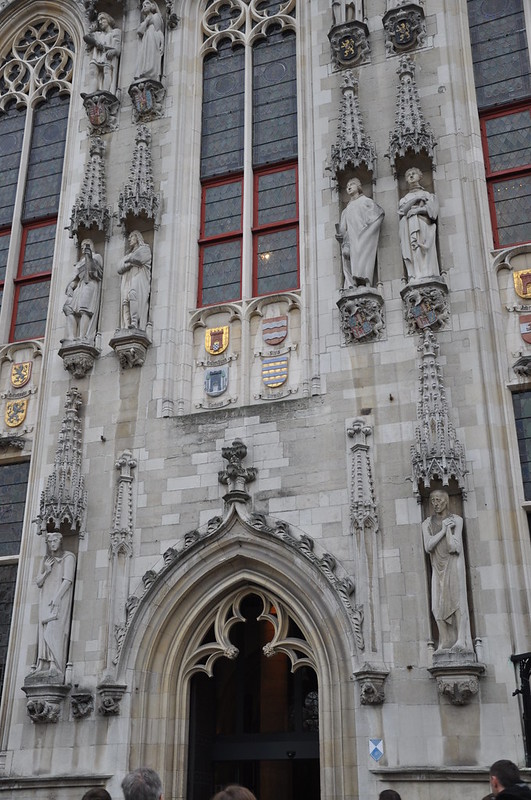
O Stadhuis foi construído em 1376 e é um dos edificios mais marcantes da praça de Burg. A sua fachada é impressionante com todo o trabalho das esculturas (algumas religiosas mas na sua maioria de governantes de Flandres) e as suas janelas em forma de ogiva, claro indicador do seu estilo gótico.
Entrámos sem grande expectativa para o que íamos ver e fomos realmente surpreendidos. O seu exterior é magnifico mas o que está dentro deixou-nos de boca aberta. A entrada custa 2,5€ e temos direito a um audio guia, nós escolhemos em inglês.

The Stadhuis was built in 1376 and is one of the most remarkable buildings of the Burg Square. Its facade is impressive with all the work of the sculptures (some religious but mostly rulers of Flanders) and its ogival windows, a clear indicator of its Gothic style.We went without great expectation and we were really surprised. Its exterior is magnificent but what’s inside left us open-mouthed. Admission is € 2.5 and we are entitled to an audio guide, we chose English.
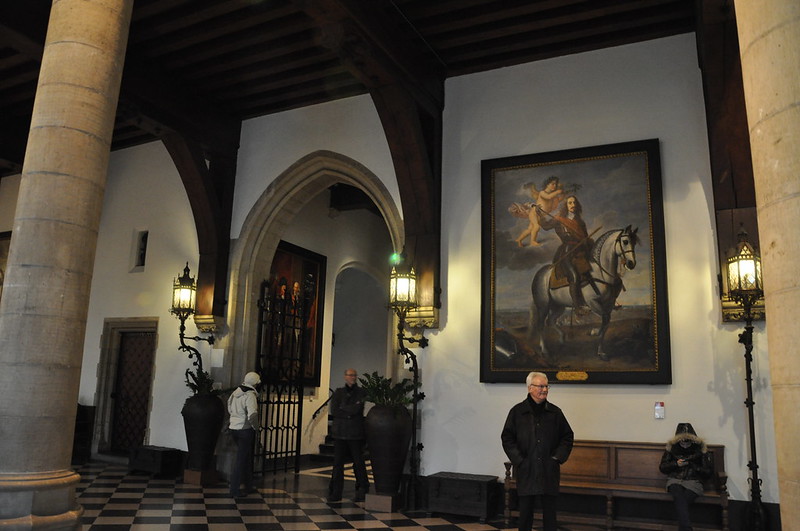
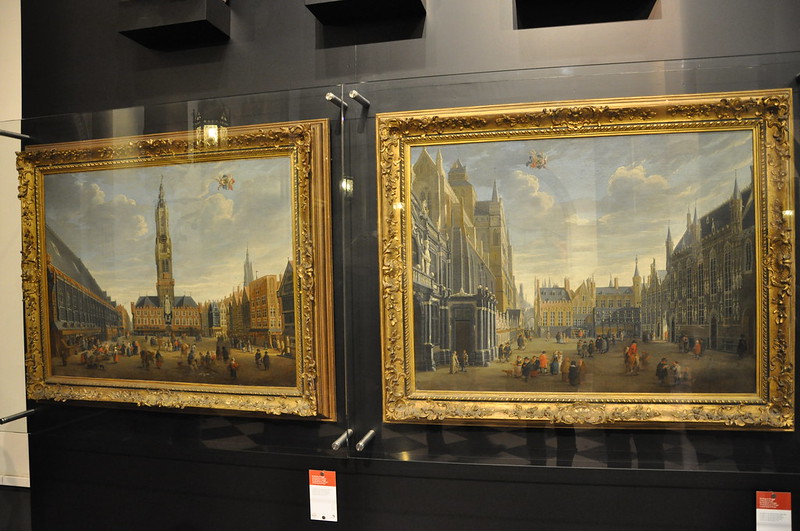
O hall de entrada ajudava a entrar na época medieval, com os quadros de ilustres cavaleiros a decorarem as paredes e numa outra zona, pinturas que ilustravam a Bruges daquela época.

The lobby helped into the medieval era, with frames of illustrious knights to decorate the walls and in another area, the paintings that illustrated Bruges that time.



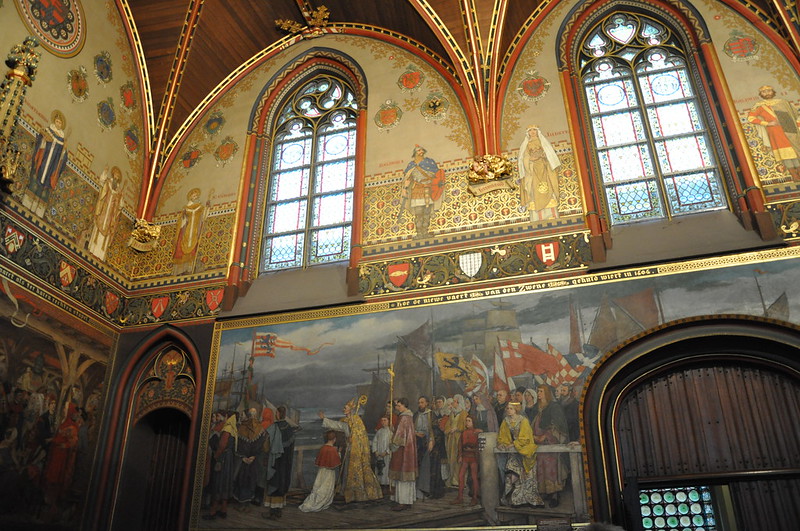
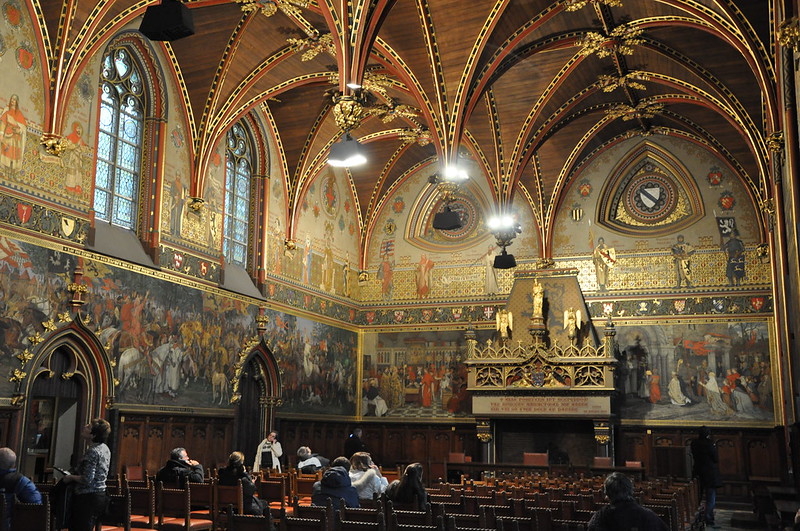
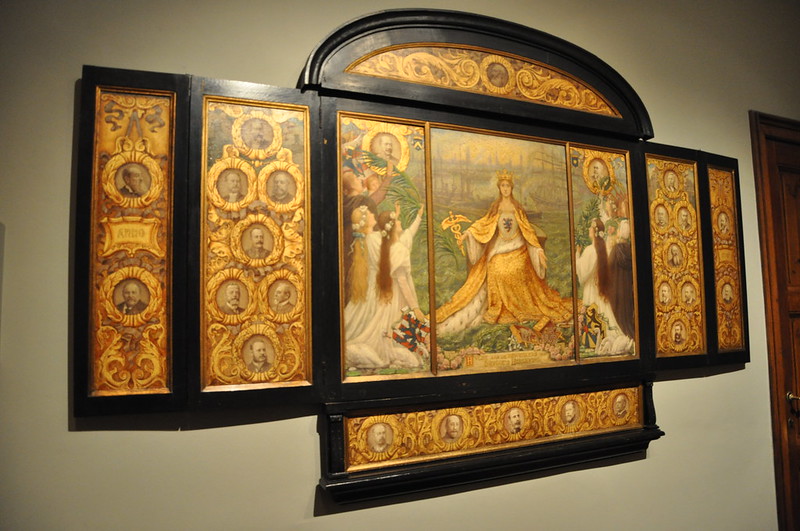
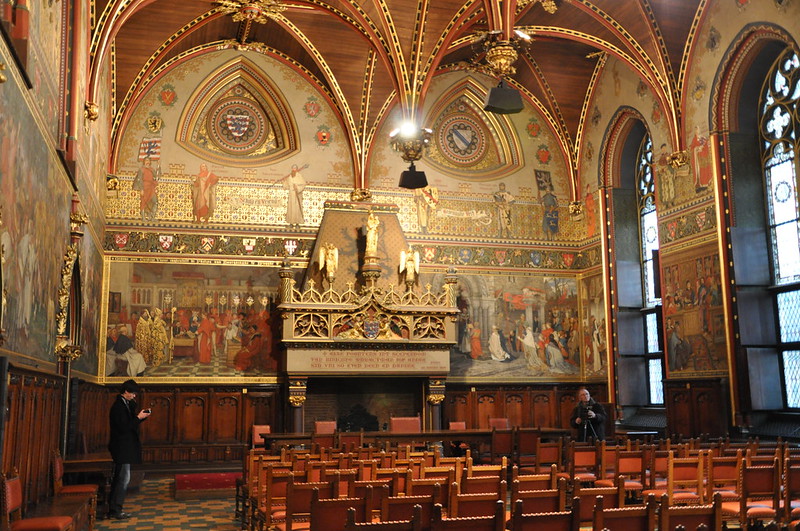
Subimos as escadas depois de pagar e entramos no Salão Gótico, construído em 1420 a verdadeira jóia do Stadhuis. Eu que raramente faço videos dos locais que visito tive que fazer um porque não tinha a certeza que as fotografias podiam capturar tamanha riqueza de detalhe.

We climbed the stairs after paying and entered the Gothic Hall, built in 1420 the real gem of the Stadhuis. I rarely make videos of the places I visit I had to make one because I was not sure that the photographs could capture such richness of detail.
As suas paredes pintadas com frescos datam do século XIX e retratam partes da gloriosa história de Bruges.
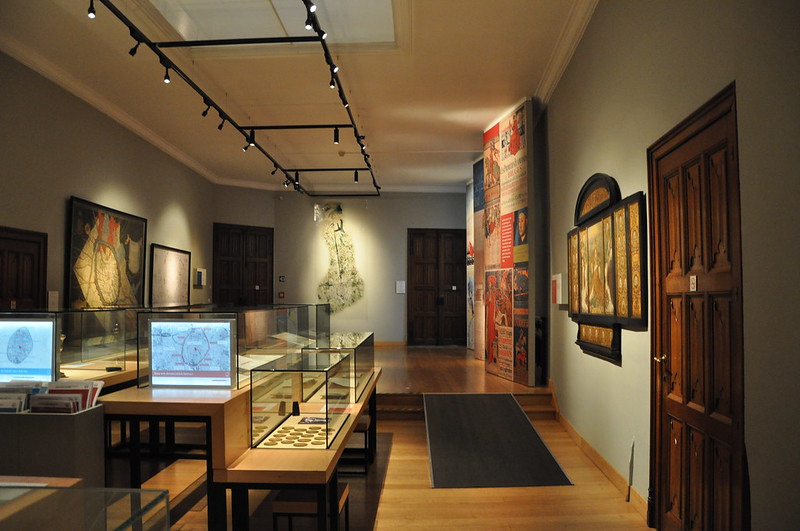
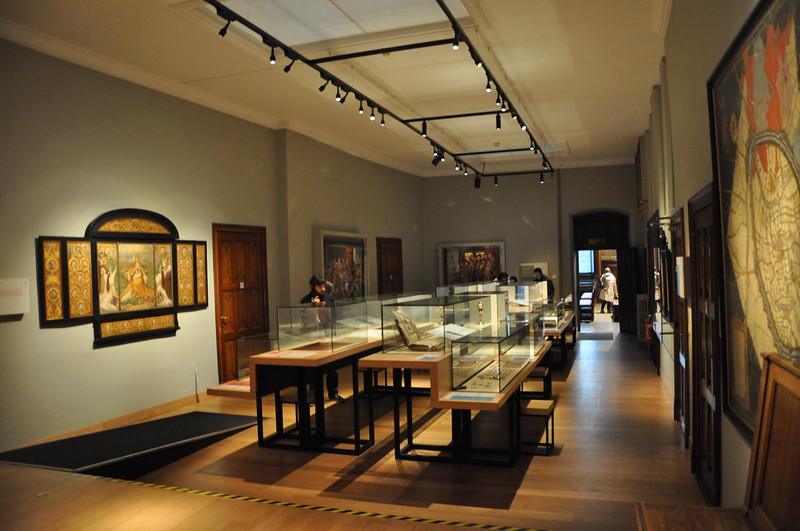
Os 2,5€ dão acesso apenas ao Salão e a uma outra sala onde estão expostas várias peças ligadas á cidade. Uma boa parte são mapas, mas podemos ver mais gravuras e também um pouco da história da cidade.

Its walls painted with frescoes dating from the nineteenth century and depict parts of the glorious history of Bruges.The € 2.5 oonly give access to this Hall and to another room where they have an exhibition of several pieces linked to the city. Most of them are maps , but we can also see more pictures and a little history of the city.

 Our guide of:
http://hojeconhecemos.blogspot.com.es/2001/03/guia-de-bruges.html

ROZENHOEDKAAI – BRUGES, BÉLGICA

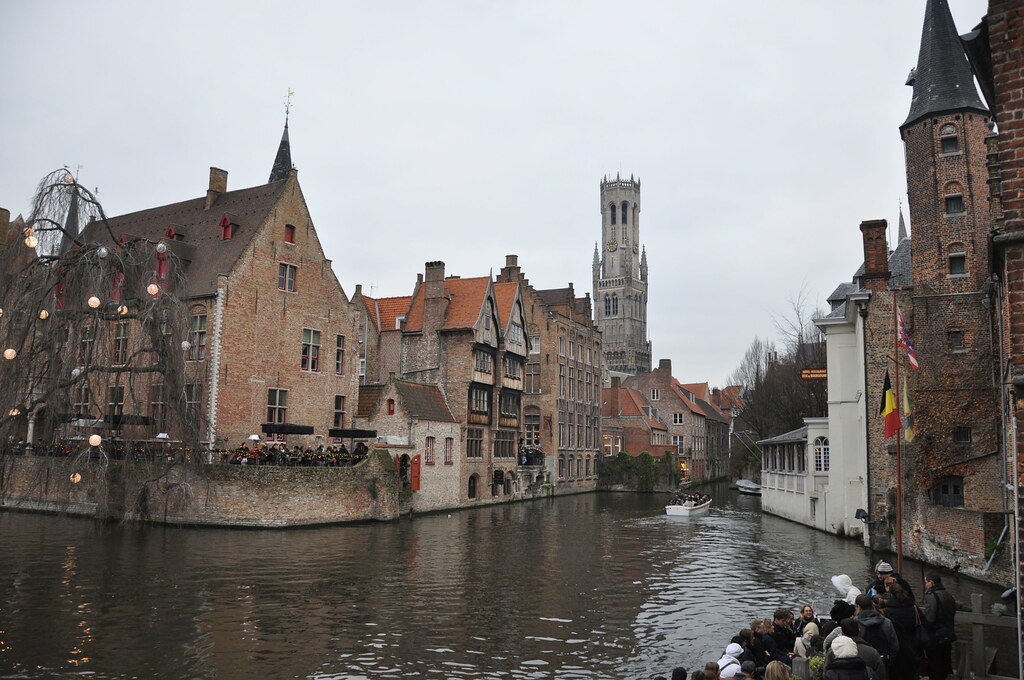
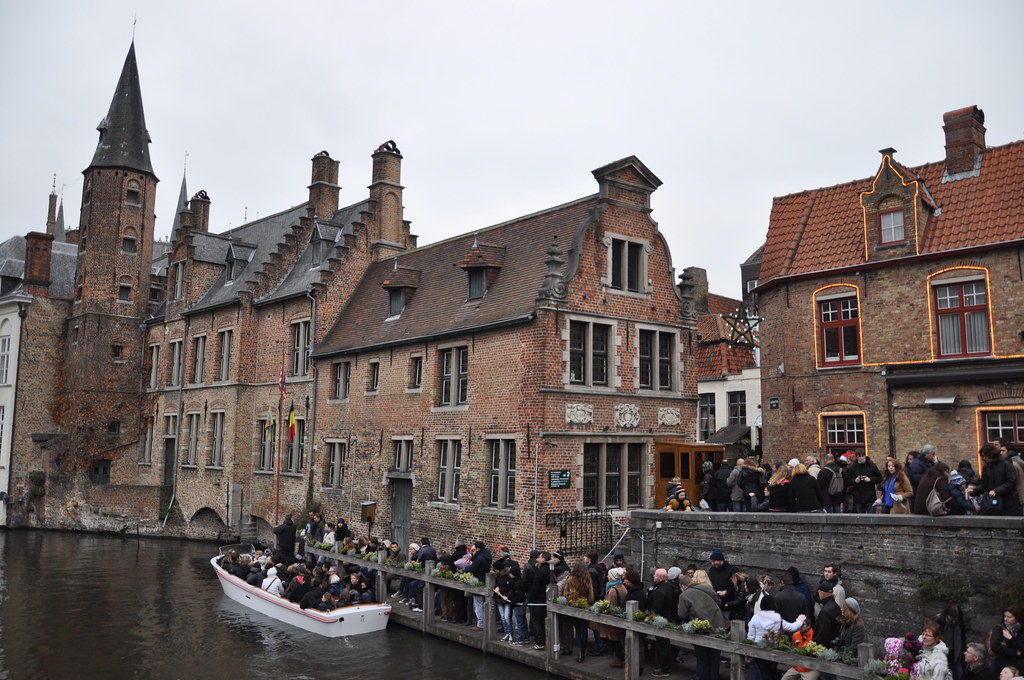
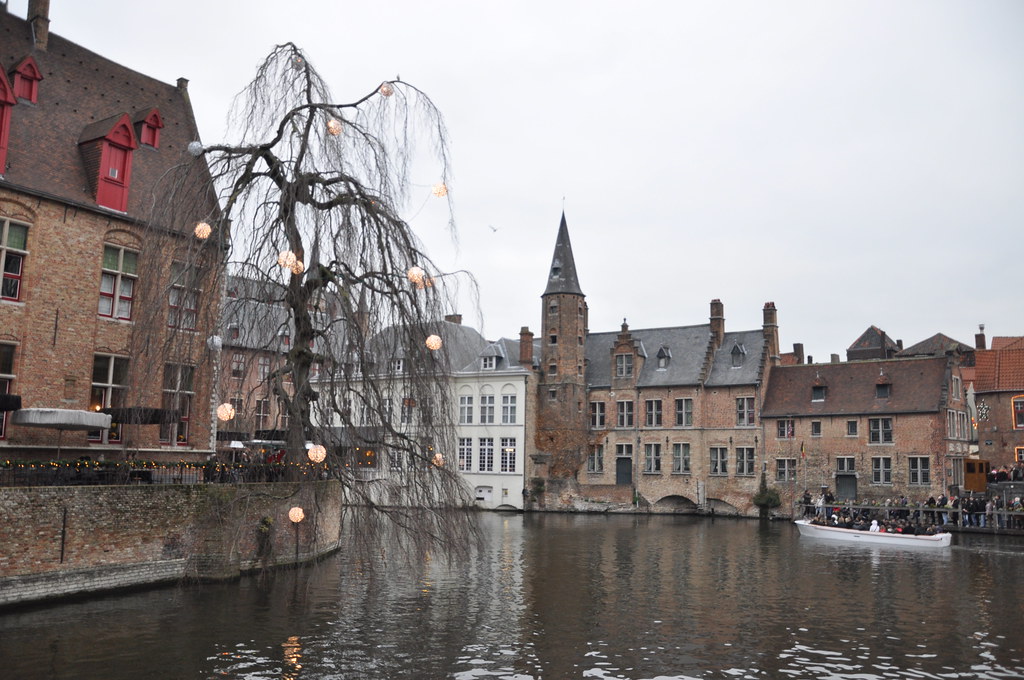
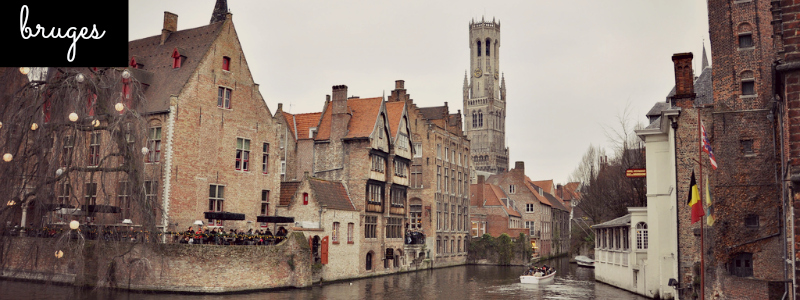
Creio que traduzido daria doca do Rosário e é talvez um dos pontos que mais gente atrai na cidade. Não há guia ou reportagem fotográfica de Bruges que não fique completa sem uma imagem deste ponto com vista para o canal e para o Belfort.
É um local priveligiado para capturar a essência da cidade.
Este é o ponto de partida para uma visita de barco por Bruges, vemos o amontoado de gente que espera ansiosamente pela sua vez. Tínhamos um dia apenas na cidade e sem marcação prévia não podíamos esperar de qualquer forma numa outra oportunidade em Bruges será o primeiro que queremos fazer.

I think that translated it would be Rosario’s dock is perhaps one of the points which attracts more people in the city. No guide or photographic report of Bruges will ever be complete without a picture from this point overlooking the canal and the Belfort.It is a privileged place to capture the essence of the city.This is the starting point for a visit to Bruges by boat, we see the mass of people anxiously waiting for their turn. We had only one day in the city and without prior appointment we could not wait for a spot in a boat, any way another time in Bruges will be the first we want to do.

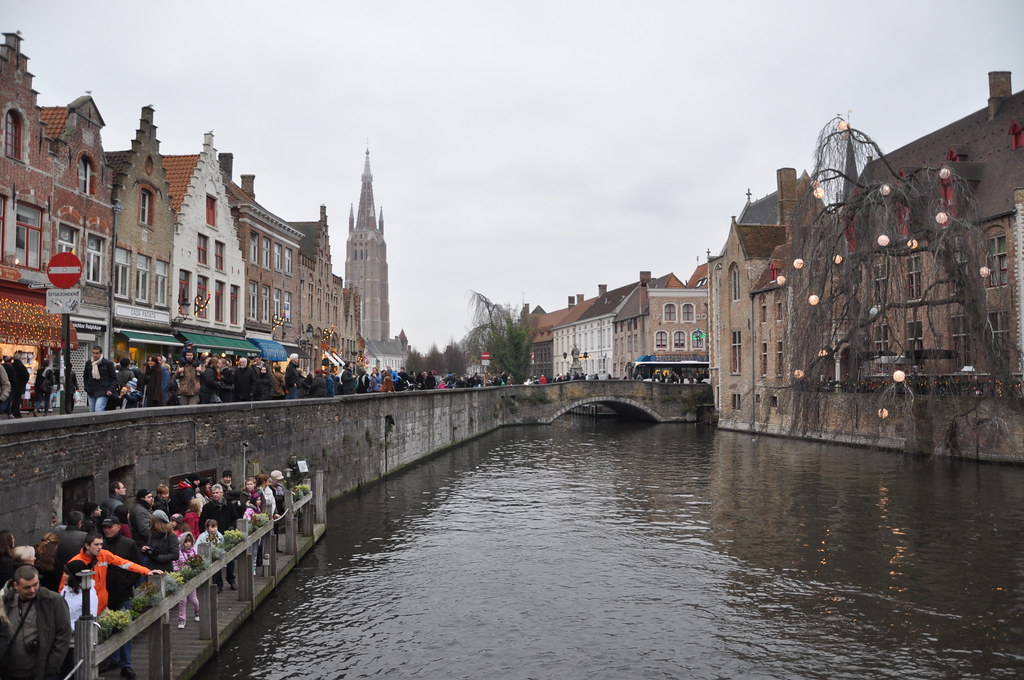
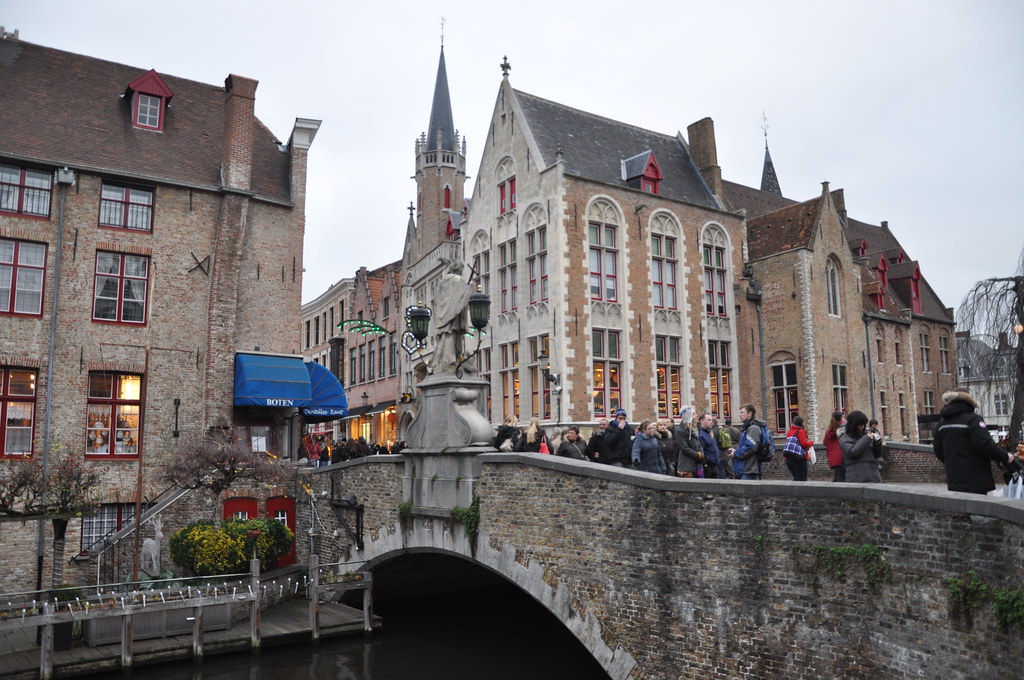
Junto a ele uma pequena ponte faz a passagem para a Wollestraat e se seguimos o canal pela Dijver podemos entender o porquê do carisma artístico da zona nas várias lojas e galerias de arte espalhadas por essa rua.

Beside it a small bridge makes the passage to Wollestraat and if we follow the channel by Dijver one can understand why the artistic charisma of the area in the various shops and art galleries spread across this Street.


Our guide of:
http://hojeconhecemos.blogspot.com.es/2001/03/guia-de-bruges.html

MARKT – BRUGES, BÉLGICA

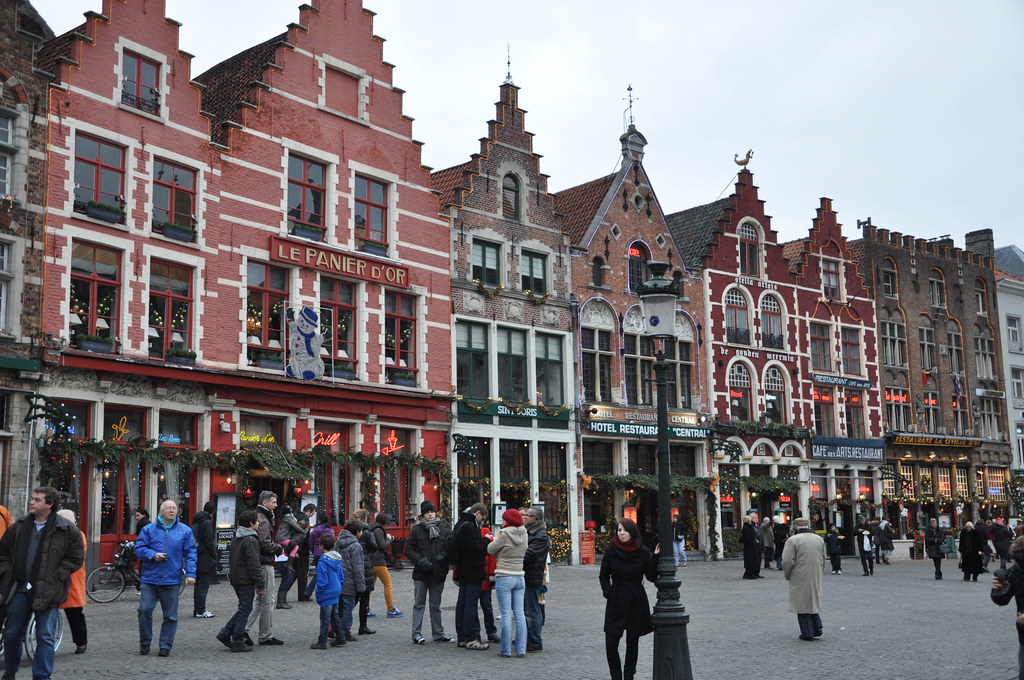
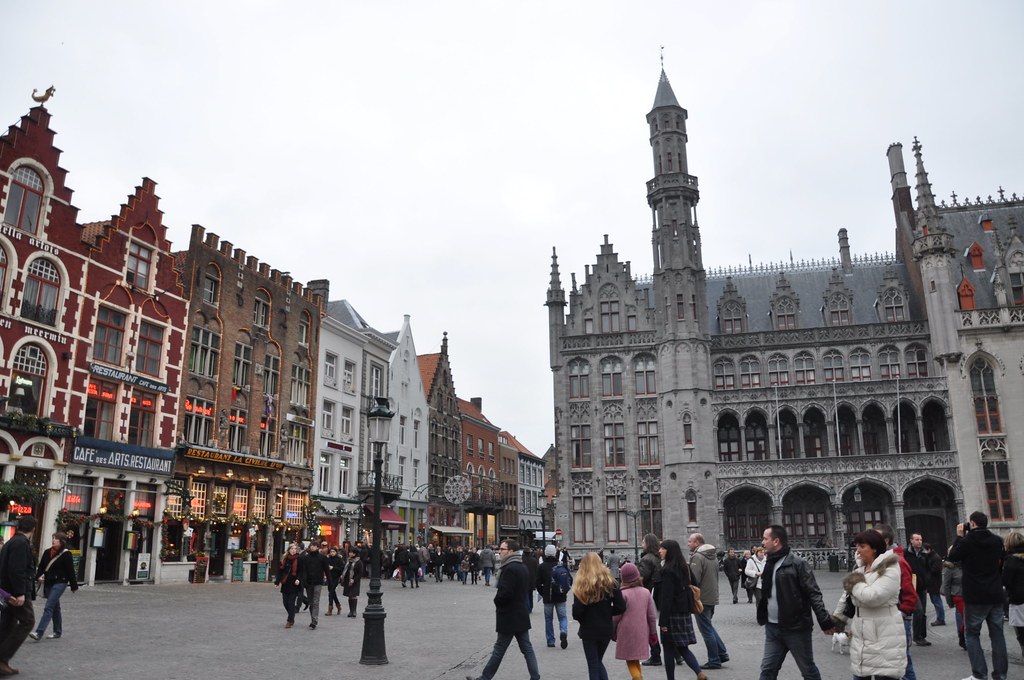
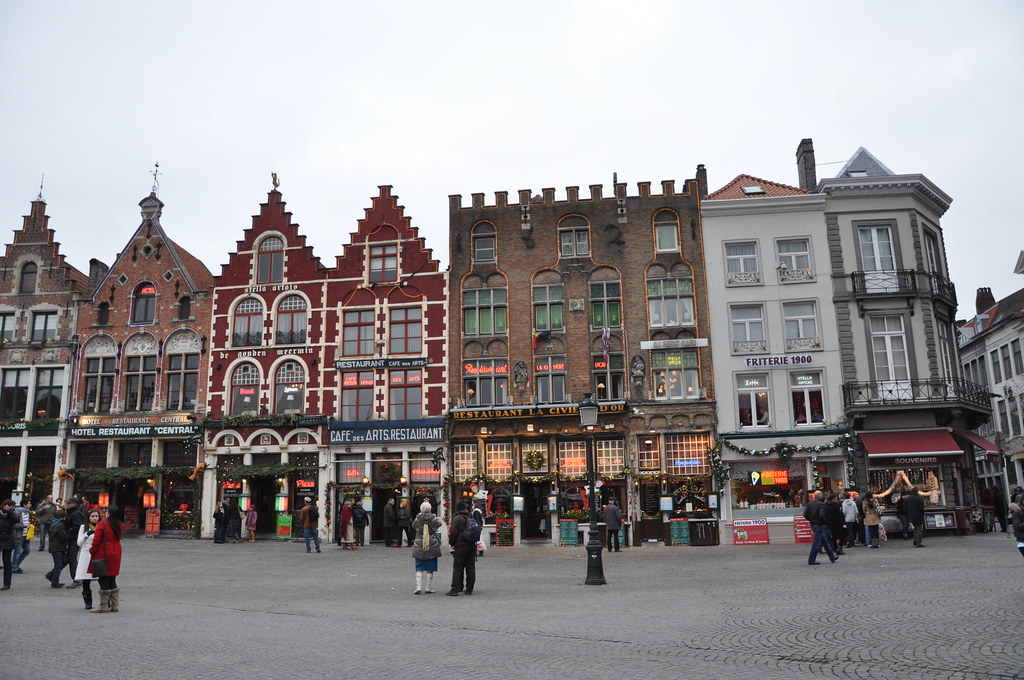
Os oitenta e três metros de altura do Belfort ajudam a localizar sem problemas a Praça do Mercado – Markt que juntamente com a Burg são as duas praças mais importantes da cidade e símbolos de uma época de grande prosperidade.
Há mais de mil anos funcionava aqui um mercado semanal hoje em dia podemos ver que ainda está ligada ao comércio, todas as quartas-feiras há um mercado que promove os produtos da região.
Funcionava como o seu principal centro comercial na época medieval e á sua volta podemos ver vários “guildhalls” – edificios que foram construídos para cada oficio e que hoje em dia albergam essas lojas e cafés. 
The eighty three meters high Belfort helps you find without problems the Market Square (Markt) that together with the Burg are the two most important squares of the city and the symbols of an era of great prosperity,
A thousand years ago a weekly market was held here today we can see that it’s still linked to the trade, every Wednesday there’s a market that promotes the product of this region.
It was it’s main commercial center in medieval times and surrounding it you can see  several guildhalls” buildings that were built for each trade and today house stores and cafés.

Ao centro um monumento dedicado a Pieter de Coninck e Jan Breydel construído no século XIX. Pieter dedicava-se á tecelagem e Jan era talhante, ambos lideraram a revolta contra a invasão dos franceses em 1302.
Do lado esquerdo do Belfort podemos ver um impressionante edificio da Provinciaal Hop Of de estilo neo-gótico e do seu lado direito está o edificio dos correios.
Vimos uma fila estranha na praça e depois percebemos para que era, esperavam a sua vez para dar uma volta por Bruges de carruagem. Aliás por toda a Markt o que podemos ver circular para além de pessoas, são as carruagens e as bicicletas.

In the center there’s a monument dedicated to Pieter de Coninck and Jan Breydel built in the XIX century. Pieter was a weaver and Jan a butcher, both led the rebellion against the french invasion in 1302.
From the left side of the Belfort we could see the impressive building of the Provinciaal Hop Of of neo-gothic style and next to it is the post office.
We saw a strange queue on the square only to realize that they were waiting their turn for a ride through Brugge by carriage. Indeed throught the Markt what you can see besides people walking around are, carriages and bicycles.
>>> Pieter de Coninck e Jan Breydel
 
>>> Provinciaal Hop

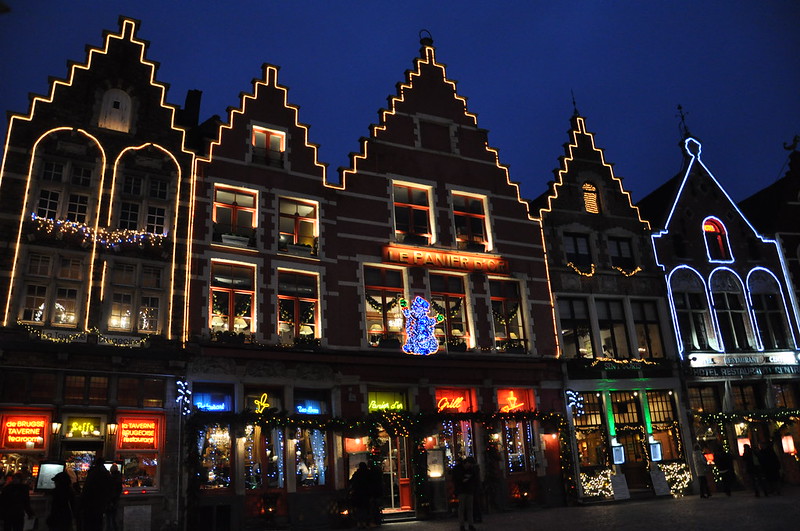
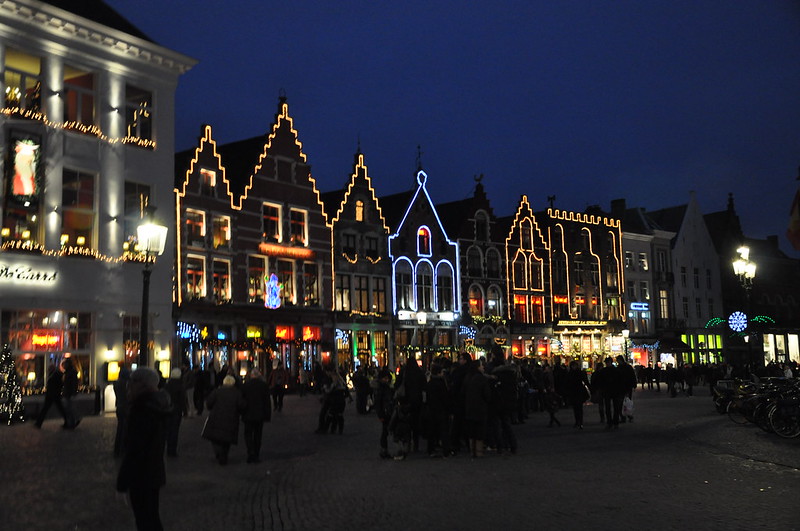
De noite e também por ser Natal, a sua iluminação e decoração tornam-na ainda mais apelativa. Nela estava a decorrer o Mercado de Natal com uma pista de gelo ao centro, várias bancas de artesanato e comida.

At night and also because it was Christmas, the light and the decoration make this square even more interesting. In it there was the Christmas Market with an ice ring in the center, several stalls with crafts and food.

Our guide of:
http://hojeconhecemos.blogspot.com.es/2001/03/guia-de-bruges.html

STEPHAN DUMON – BRUGES, BÉLGICA

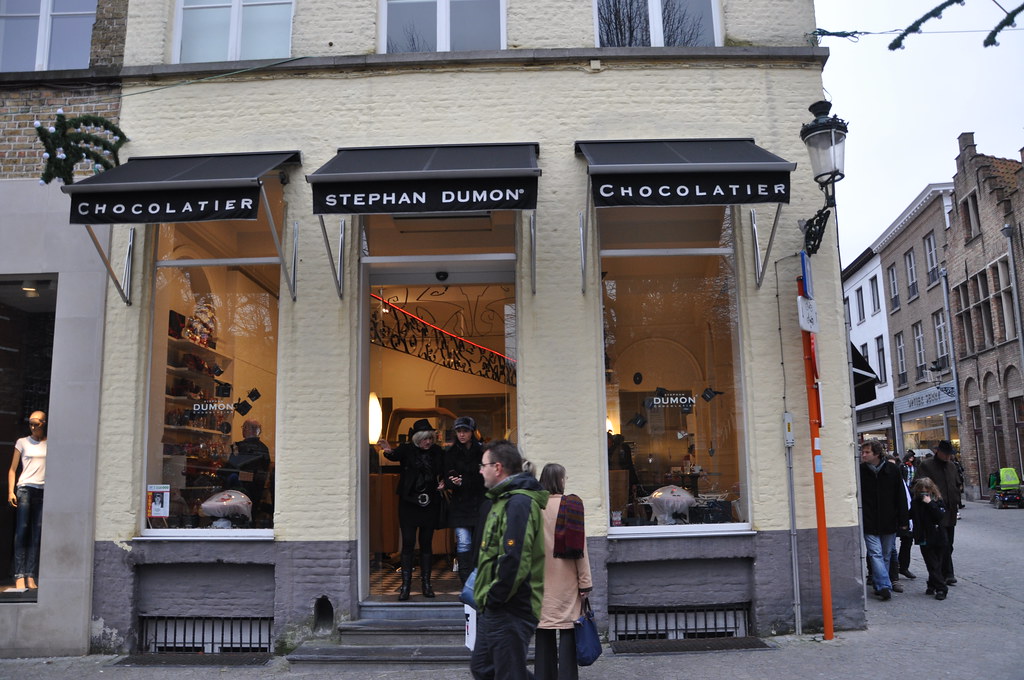
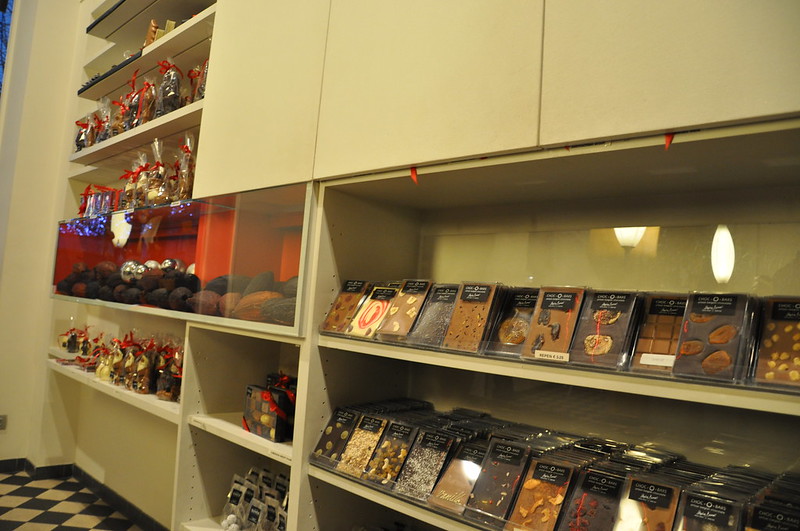
Não podíamos deixar Bruges sem levar connosco alguns dos famosos chocolates artesanais belgas. Os nossos comprámos nesta loja: Stephan Dumon que fica na Simon Stevinplein (Praça de Simon Stevin).
We couldn’t leave Brugge without taking with us some of the famous artisanal belgian chocolat. We bought ours in this store: Stephan Dumon that is in the Simon Stevinplein (Simon Stevin square).


A verdade é que apesar de ser uma loja pequena acabamos por nos perder no seu interior. A variedade é tanta que a escolha se torna dificil e há de tudo um pouco: bombons, tabletes simples, tabletes com pedaços, figuras de chocolate, etc..
Que vontade de comprar a loja toda…

Truth is that despite being a small store we wend up losing ourselves inside of it. So much variety that is difficult to choose there is a bit of everything: bombons, chocolate tablets, tablets with pieces, chocolate figures, etc..
I wanted to buy the whole store…

Website: http://www.chocolatierdumon.be/


Our guide of:

http://hojeconhecemos.blogspot.com.es/2001/03/guia-de-bruges.html

eat: T SCHRIJVERKE, BRUGES, BÉLGICA

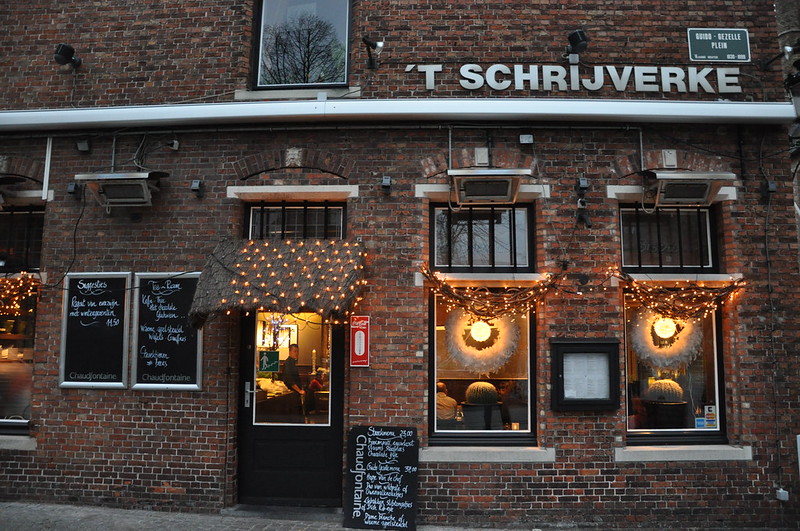
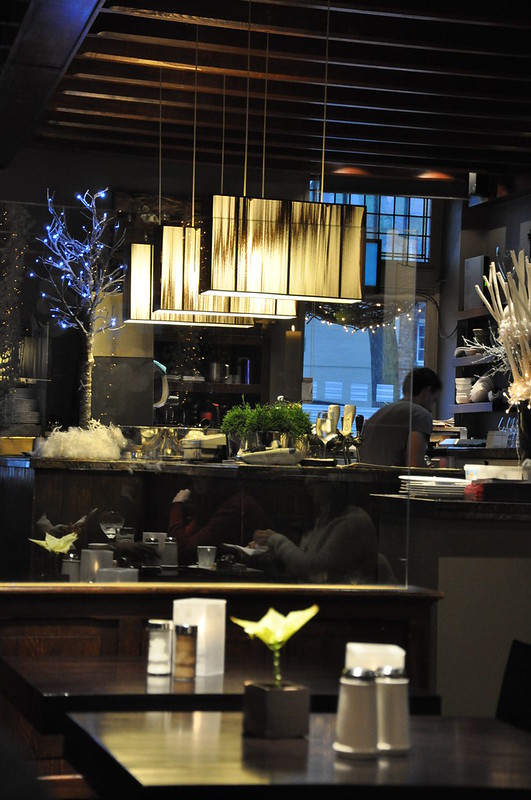
Um restaurante e casa de chá com um nome tão complicado mas com aquele ambiente acolhedor que se procura numa cidade que apela ao romantismo como Bruges.
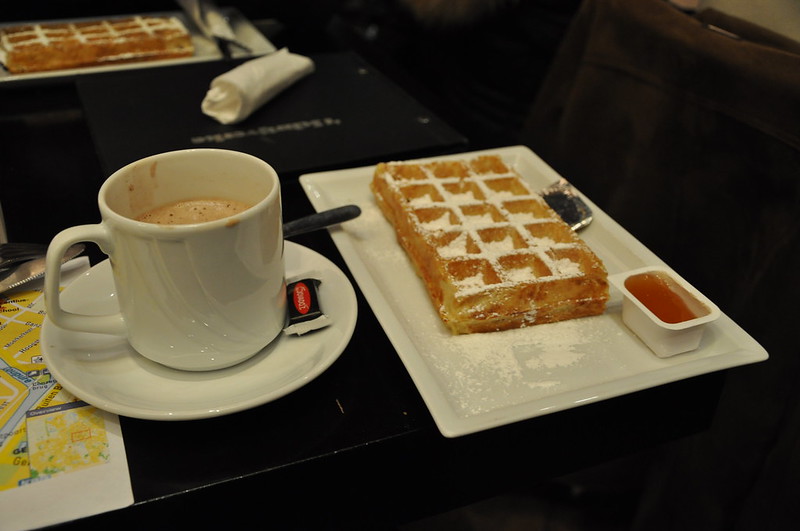
Queríamos um daqueles lanches típicos belgas: um waffle e um chocolate quente. Apenas e só! Foi o que conseguimos aqui, depois de um longo passeio pela cidade merecíamos este doce descanso.
A restaurant and a tea house with a name so complicated but with that cozy feel that you look in a city that is so romantic as Brugge is.
We wanted one of those typical belgian snacks: a waffle with hot chocolate. Just that! And we got it here, after a long walk around the city we deserved this sweet rest.


Habituados que estamos a pôr tudo em cima de um waffle que nos esquecemos de como são bons apenas com o açúcar em pó por cima e quando são bons, são bons assim por si só.
A única desilusão foi mesmo o chocolate quente, numa terra conhecida pelas suas “chocolateries” o que eu bebi não estava mau mas parecia ser de máquina (daquelas que mistura água e leite em pó).
Também funciona como restaurante e ainda espreitámos a carta, mas não houve tempo em Bruges para jantar porque poderia ser uma opção.
We are so used to putting everything on top of a waffle that we forget how good it is just with some powder sugar and if they are really good, they are without anything on top.
The only disapointment was actually the hot chocolate, in a place so famous for it’s “chocolaterie” when I drank it is wasn’t bad but it looked like it was taken from a machine (from those that mixes water with powder milk).
It’s also a restaurant and we did took a sneak peak into the menu but there wasn’t enough time in Bruges to have dinner because it could have been an option.

 
Fica na Gruuthusestraat e tem website: http://www.tschrijverke.be/
Our guide of:

http://hojeconhecemos.blogspot.com.es/2001/03/guia-de-bruges.html

BURG – BRUGES, BÉLGICA

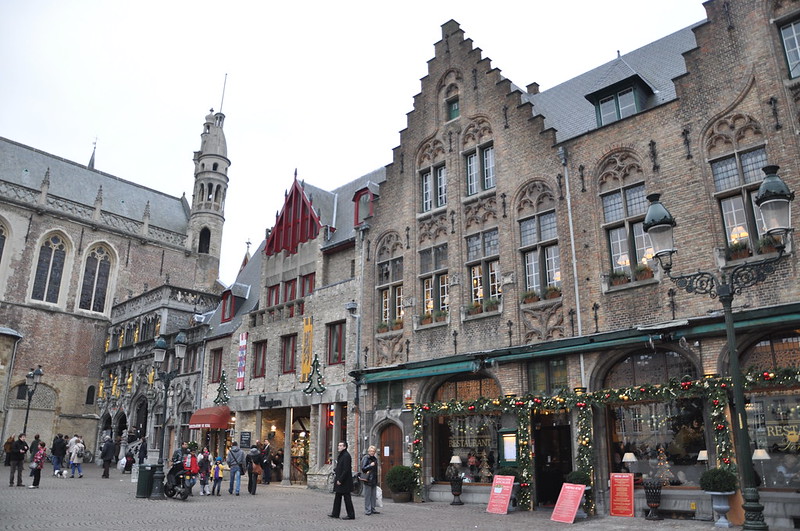
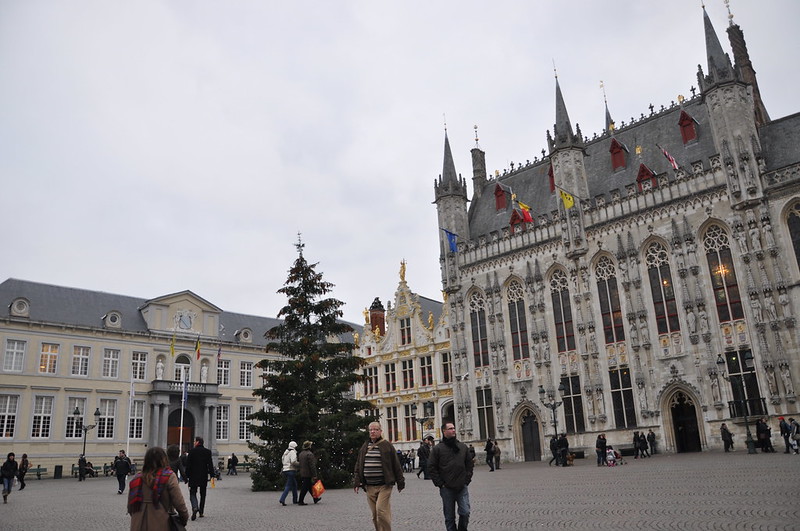
A praça de Burg juntamente com a Markt fazem parte da riqueza histórica e arquitectónica de Bruges. A primeira ainda que mais pequena concentra alguns dos edificios mais relevantes da cidade como o Stadhuis (Câmara Municipal) ou a Basílica do Sangue Sagrado.
Saímos da Markt e entrámos na Burg onde o Stadhuis com a sua trabalhada fachada reclama de imediato a nossa atenção. A construção é do século XIV e reflecte o grande momento em a cidade estava no seu apogeu no comércio internacional.
The Burg square together with the Markt are part of the rich history and architecture of Bruges. The first although smaller concentrates some of the most important buildings of the city as the Stadhuis (City Hall) or the Basilica of the Holy Blood.We left the Markt and entered the Burg where the Stadhuis with its crafted facade demands our attention immediately. The building is from the fourteenth century and reflects the great momento that the city had at its peak in international trade.

A Basílica foi o primeiro que visitámos, está no lado direito da praça e não podemos deixar-nos levar pelo seu pequeno tamanho, no seu interior está um pedaço de pano que terá limpo o sangue de Cristo e que veio da Terra Santa no século XII.
Ao passar pelas portas da cinzenta fachada ornamentada com estatuetas douradas, não visitamos uma igreja mas sim duas. No nível inferior está a de estilo românico dedicada a S. Basílio, menos ostensiva que a do piso superior que no século XV foi remodelada para um estilo gótico depois destruída durante a invasão francesa e voltou a ser reconstruída no século XIX com o mesmo estilo.
The Basilica was the first we visited, is on the right side of the square and we can not let ourselves be carried away by its small size, inside is a piece of cloth that might have be used to clean the blood of Christ and came from the Holy Land in the twelfth century .
When you walk through the doors of the gray facade ornamented with golden statuettes, we don’t visit one church but two. The lower level is in a Romanesque style dedicated to S. Basil, less ostentatious than the upper deck which was remodeled in the fifteenth century Gothic style to a later destroyed during the French invasion and was again rebuilt in the nineteenth century with the same style.
 
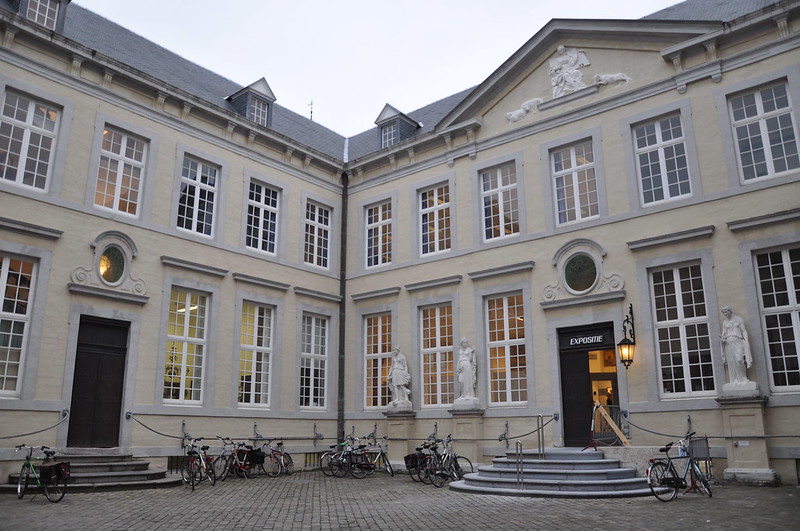
Outro dos edificios mais marcantes da praça está ao lado do Stadhuis. O Oude Griffie é um edificio do Renascimento construído entre 1534 e 1537, restaurado recentemente e que funciona como museu. Antigamente funcionaria como um registo civil. 
Junto ao mesmo está uma passagem a que chamam de Burro Cego (Blinde Ezelstraat) e que leva ao Mercado do Peixe.
Another of the most remarkable buildings of the square is next to the Stadhuis. The Oude Griffie is a Renaissance building constructed between 1534 and 1537, recently restored and operates as a museum. Formerly act as a registrar.
Next to it is a passage that called Blinde Ezelstraat that leads to the Fish Market.
Um edificio mais recente está do lado esquerdo do Oude Griffie, é o Landhuis também conhecido como o Palácio da Liberdade de Bruges. Foi construído no século XVIII. 
A newer building is on the left of the Oude Griffie, Landhuis is also known as the Palace of Liberty of Bruges. It was built in the eighteenth century.

Our guide of:
http://hojeconhecemos.blogspot.com.es/2001/03/guia-de-bruges.html

IGREJA DE NOSSA SENHORA – BRUGES, BÉLGICA

A primeira coisa que chama a atenção na Igreja de Nossa Senhora (Onze-Lieve-Vrouwekerk) é a sua torre de 122 metros de altura, a mais alta de Bruges. A sua construção começa a 1220 e só termina duzentos anos mais tarde.
Originalmente com uma construção de estilo românico, o resultado final é predominante gótico pelo tempo que levou a construir. Entramos por uma lateral e ao chegar á nave central podemos ver o seu trabalhado altar e por trás os túmulos de Carlos, Duque de Borgonha (o Audaz). Foi o último duque de Valois e ao seu lado, a sua filha Maria, Duquesa de Borgonha. 
 
The first thing that stands out in the Church of Our Lady (Onze-Lieve-Vrouwekerk) is its tower of 122 meters high, the highest of Bruges. Its construction begins in the year 1220 and only ends two hundred years later.
Originally with a Romanesque building, the end result is the predominant Gothic by the time it took to build. We entered through a side and arriving at the nave you can see it’s elaborate altar and behind it the graves of Charles, Duke of Burgundy (the Bold). It was the last Valois Duke of and beside her, his daughter Mary, Duchess of Burgundy.

Continue a ler “IGREJA DE NOSSA SENHORA – BRUGES, BÉLGICA”

Pontes de Girona – Espanha

Sem dúvida que uma das grandes atracções da cidade é o rio Onyar que separa as suas coloridas margens que se voltam a unir com a ajuda das suas pontes, algumas já emblemáticas. A primeira que vemos na foto é a Ponte de Pedra também conhecida por D. Isabel II já que foi durante o seu reinado que foi construída (Ano de 1856).
A que podemos ver actualmente foi construída onde antes estaria uma ponte medieval. Será uma das mais antigas que existe a ligar o bairro antigo com o que chamam de mercadal.
Undoubtedly one of the great attractions of the city is the river Onyar that separates its colorful shores that unite again with the help of its bridges, some already emblematic. The first one that we see in the photo is the Stone Bridge also known by D. Isabel II since it was during its reign that was constructed (Year of 1856).
The one that we can see at the moment was constructed where before would be a medieval bridge. It will be one of the oldest that exists to connect the old quarter with what they call mercadal.

Continue a ler “Pontes de Girona – Espanha”

Igreja Sant Feliu – Girona, Espanha

A placa que a identifica diz que é a construção gótica mais representativa de Girona. É dedicada a S. Félix (ou S. Feliu em catalão), há dúvidas sobre o seu local de nascimento, dizem que foi em Itália e terá sido um mártir que morreu na cidade espanhola.
A igreja está localizada numa simpática praça com o mesmo nome, á volta dela cafés/restaurantes com esplanada tornam o espaço muito agradável e seguramente que de noite será um dos locais de eleição para comer ou tomar um copo com vista para a imponente fachada onde se destaca a sua torre campanário desenhada por Pere Sacoma o mesmo da Catedral de Sta. Maria que também podemos ver na cidade.
The plaque that identifies it says it is the most representative Gothic building of Girona. It is dedicated to St Félix (or S. Feliu in Catalan), there are doubts about his birthplace, some said it was in Italy and he was a martyr who died in this spanish city.
The church is located in a nice square of the same name, around it cafes / restaurants with outdoor seating make the space very pleasant and surely that in the evening it is one of the favorite spots to eat or drink overlooking the imposing façade that it’s main highlight is the bell tower designed by Pere Sacoma the same from the Cathedral of St. Mary that we can also see in the city.

Continue a ler “Igreja Sant Feliu – Girona, Espanha”

eat: CHOCOLATERIA VALOR, ZARAGOÇA, ESPANHA

Apesar de termos entrado numa Valor em Zaragoça a verdade é que há destas chocolaterias por toda a Espanha. Com uma interessante herança de produção de chocolate desde o final do século XIX, os seus cafés diversificam a oferta também para sobreviver ainda que o seu negócio base seja sempre o chocolate, seja ele para consumo em casa (tabletes, bombons, etc..) ou para consumo nas chocolaterias onde se pode comer o tradicional churro e molhar numa taça de rico chocolate.
 
Although we entered a Valor in Zaragoza, the truth is that there are many of these chocolatiers throughout Spain. With an interesting heritage of producing chocolate since the late XIX, it’s cafes diversify their offer also to survive even if their business is based on chocolate, be it for home consumption (chocolate bars, etc..) or for comsumption in their cafes where you can eat the tradicional “churro” and dipping it into a bowl of rich chocolate.

A marca originária de Alicante (Comunidade Valenciana) foi fundada pelo Sr. Valor (D. Valeriano Lloret). A sua primeira chocolataria abre nos anos 80 e nos anos 90 começa a expansão com um franchising. 
Tendo ido no Verão, não fomos pelos chocolates mas sim para tomar o pequeno-almoço e encontrámos a sua agradável esplanada na Plaza Sas a caminho da Plaza del Pilar.
Tem o típico menú de “desayuno” com o pão com tomate e azeite, mas também se pode pedir com compota e manteiga. Para beber um sumo de laranja ou café com leite, fica á escolha. Quando o tempo arrefecer temos que provar os churros com chocolate.