do: QUAI ST-NICOLAS – ESTRASBURGO, FRANÇA

Para nós, um dos grandes encantos de Estrasburgo é a zona junto ao Rio Ill. No seguimento da Quai des Bateliers, a Quai St-Nicolas é uma das mais notáveis da cidade com os seus prédios antigos, alguns garantem vista para o rio desde o século XVI.
Mantendo o seu cunho medieval como quem pede para o tempo não avançar, a zona da Quai de St. Nicolas vive do comércio e da restauração e é fácil imaginarmos todos os dias a passar por aqui deslumbrados como se fosse a primeira vez. 
 
For us, one of the great charms of Strasbourg is the area along the river Ill. Following the Quai des Bateliers, the Quai St-Nicolas is one of the most remarkable in the city with its ancient buildings, some guarantee a view to the river since the sixteenth century.
Keeping it’s medieval mark like someone that ask time to stand still, the area of Quai de St. Nicolas lives of trade and restaurants and it’s easy to imagine coming here everyday and be dazzled as if for the first time.

A essência da cultura da Alsácia está bem presente nesta rua e talvez por isso seja justo colocar aqui o Musée Alsacien. No seu interior várias peças sejam decorativas ou de uso diário, ligadas ao mundo rural e á região.  
É daqueles museus cheios de charme em que cada pequeno objecto conta uma história, uma forma de viver. 
 
The essence of the Alsace culture is very present in this street and maybe it’s only fair to put here the Musée Alsacien. Inside there are several decorative pieces or of everyday use, linked to rural areas and to the region.
It is those museums full of charm where each small object tells a story, a way of living.

Seguimos pela a rua até cruzarmos a ponte que liga á Rue de la Division Leclerc. As flores dão mais um toque de cor á cidade e o moderno eléctrico contrasta com o entorno antigo.
É uma rua excelente para um passeio.
 
We stayed in the Street until we crossed  the bridge that connects to the Rue de la Division Leclerc. The flowers give a touch of color to the city and the modern electrical contrasts with the surrounding old.
It’s a great street for a stroll.

 
Mais/More posts:

do: PRAÇA GUTENBERG – ESTRASBURGO, FRANÇA

Quando chegámos a Estrasburgo estacionámos o carro nesta praça, o nosso principal objectivo era visitar a Catedral mas a verdade é que acabámos por ficar um pouco mais a conhecê-la.
Ao centro a estátua do homem que dá o nome á praça: Johannes Gutenberg. Nascido na Alemanha, ele foi o inventor da prensa móvel e foi o mote da Revolução da Imprensa, estávamos no século XV em que uma cópia do livro era feita á mão e o prazo de entrega era: eternidade. Com a sua invenção tornou-se mais fácil fazer cópias de livros e imprimir boletins informativos, começa a era da informação.
Quando se muda para Estrasburgo começa a produzir uma cópia da Biblia, na altura demorou 5 anos a fazer e tirou o emprego aos monges.
 
When we arrived in Strasbourg we parked the car in this square, our main objective was to visit the Cathedral but the truth is that we ended up staying a little longer to know it.
At the center the statue of the man who gives the name to the square: Johannes Gutenberg. Born in Germany, he was the inventor of the printing press and  was the motto for the Revolution of the Press, we were in the fifteenth century in which a copy of the book was done by hand and it was delivery time: eternity. With his invention  it became easier to make copies of books and print newsletters, the information era begins.
When moving to Strasbourg he begins producing a copy of the Bible, that time it took 5 years to make and the monks were out of a job.

Fomos na época da Páscoa e havia do pequeno mercado com decorações alusivas a época e os tradicionais ovos de chocolate, para além de alguns divertimentos para crianças como um carousel.
Um dos edificios mais importantes da praça é o da Câmara de Comércio e Indústria de Estrasburgo. Antes de ser a sede para Câmara de Comércio funcionava como Câmara Municipal tornando-a praça num dos locais mais importantes da cidade. O seu estilo arquitectónico deriva do renascentismo alemão.
Também da praça começamos a ver a Catedral já que a Rue Merciere sai da Place Gutenberg até á praça onde está fica este importante monumento de Estrasburgo. 
 
We went at Easter time and there was a market with small decorations alluding season and the traditional chocolate eggs, plus some amusements for children like a carousel.
One of the most important buildings of the square is the Chamber of Commerce and Industry of Strasbourg. Before being the headquarters for the Chamber of Commerce it was the Town Hall making this square one of the most important places of the city. Its architectural style is derived from the German Renaissance.
Also from the square we can see the Cathedral as the Rue Merciere comes out of the Place Gutenberg until the square where it’s located this important monument of Strasbourg.


Mais/More posts:
Parlamento Europeu – Estrasburgo, França

Com frequência ouvimos notícias sobre o Parlamento Europeu e as decisões que ali são tomadas, por isso uma ida a Estrasburgo supõe para além da visita á Catedral uma passagem pelo local onde construiram um complexo de edificios onde para além do Parlamento está também o Palácio dos Direitos do Homem.
Often we hear news about the European Parliament and the decisions that are made there, so a trip to Strasbourg supposed beyond the visit to the Cathedral by a passage where a complex of buildings built beyond where Parliament is also the Palace of Rights Human.

Continue a ler “Parlamento Europeu – Estrasburgo, França”

Catedral de Nossa Senhora – Estrasburgo, França

Nem consigo contar as voltas que dei para tentar fotografar a fachada desta Catedral, outrora o edificio mais alto do mundo e cuja torre tem cerca de 142 metros de altura. A largura da praça onde está também não permite ganhar mais distância para o fazer mas a verdade é que só da Praça de Gutenberg (pela Rue Merciére) consegui uma aproximação.
Objectivos fotográficos á parte, a verdade é que esta catedral impressiona não só pela sua dimensão como por todo o detalhe e trabalho colocado na sua impressionante fachada de estilo Gótico.
 
I can not even count the turns I gave to try to photograph the facade of this cathedral, once the world’s tallest building whose tower is about 142 meters tall. The width of the square where it is also does not allow to gain more distance to do so but the truth is that only from the Gutenberg square (along Rue Merciere) I was able to get it.
Photographic objectives aside, the truth is that this cathedral is impressive not only for its size as for all the detail and work put in its stunning Gothic facade.

Continue a ler “Catedral de Nossa Senhora – Estrasburgo, França”

Palácio do Louvre – Paris, França

Fazer uma “road trip” tem vantagens e desvantagens principalmente se o planeamento não é bem feito. Como o lema era pararmos onde nos apetece, passar por Paris significava não ter uma agenda definida, assim que quando decidimos visitar o Louvre fomos tão ingénuos ao ponto de pensar que não íamos apanhar uma grande fila para entrar. Pois estava uma para entrar e outra para comprar bilhete. Tínhamos um dia e meio em Paris e acabámos por aproveitar só o exterior do Louvre (duas vezes em Paris continuo sem entrar no museu).
Make a road trip has advantages and disadvantages especially if planning is not done well. As our motto was to stop where we please, pass through Paris meant not having a set agenda, so when we decided to visit the Louvre were so naive as to think that we were not going to catch a big queue to get in. There was a queue a go in and another to buy the ticket. We had a day and a half in Paris and we ended up just enjoing the exterior of the Louvre (I’ve been to Paris twice and still haven’t entered the museum).

Continue a ler “Palácio do Louvre – Paris, França”

Porte Cailhau – Bordéus, Espanha

Saindo da Place de la Bourse seguimos pela rua de Richeliu até que nos chamou a atenção a Porta Cailhau. A visão era tremenda parecia que estávamos outra vez em Carcassone, como se fosse uma amostra. Foi construído como um arco triunfal em honra da vitória do rei Carlos III na batalha de Fornovo em Itália mas fazia parte da estrutura defensiva que protegia a cidade de Bordéus no século XV. Tem 35 metros de altura e é uma excelente obra do Renascimento.

Leaving the Place de la Bourse followed by street Richeliu something caught our attention the door Cailhau. The view was tremendous looked like we were again in Carcassone, like a sample. It was built as a triumphal arch in honor of King Carlos III victory at the Battle of Fornovo in Italy but was part of the defensive structure that protected the city of Bordeaux in the fifteenth century. It is 35 meters high and is a great Renaissance work.

Continue a ler “Porte Cailhau – Bordéus, Espanha”

RUE JEANNE D’ARC, ORLEÃES, FRANÇA

Que outro nome poderia ter uma das principais ruas da cidade senão o da Joana D’Arc?

E foi por ela que começou o nosso dia em Orleães e tomámos o pequeno-almoço num pequeno bar chamado Today. A verdade é que não estavam muitos negócios abertos porque era fim de semana e o próprio senhor do bar teve que ir comprar os croissants para nos vender a nós, que é um facto curioso já que podia ter dito que não tinha mas preferiu manter o cliente e caminhar até á padaria mais próxima. Excelente atitude! Devíamos ter seguido os seus passos e descubrir a padaria…


Passámos por esta rua numa altura complicada porque estava em obras o que lhe retirava algum encanto e afastava as pessoas também era cedo e estava vazia, por outro lado pode ser visto como um privilégio andar por esta rua sem carros e sem pessoas, tranquilamente a ver as montras das várias lojas que ali estão que vão desde decoração a “chocolateries”, passando por supermercados e comida “fast-food”.


Ao fundo da rua, a Catedral sobresai. É uma imagem fantástica principalmente quando temos o nosso campo de visão bastante limpo.


E outro ponto que chama atenção na rua são as suas coloridas bandeiras, talvez colocadas para as festas a Santa Joana (D’Arc) e que segundo percebemos representam os brasões de nobres que lutaram na guerra contra os ingleses. Uma delas é de Gilles de Rais e uma outra era de Richemont, ambos lutaram lado a lado com Joana D’Arc.


Artigos Relacionados:


 Place du

Martroi

Casa de

Joan D’Arc

 Catedral

Sainte-Croix


sleep: HOTEL GEORGES VI – BIARRITZ, FRANÇA

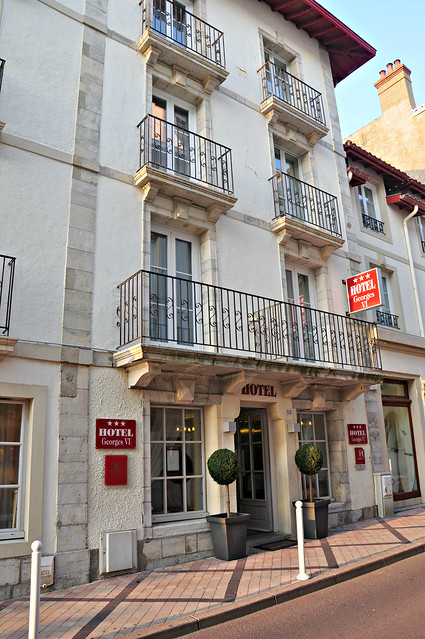
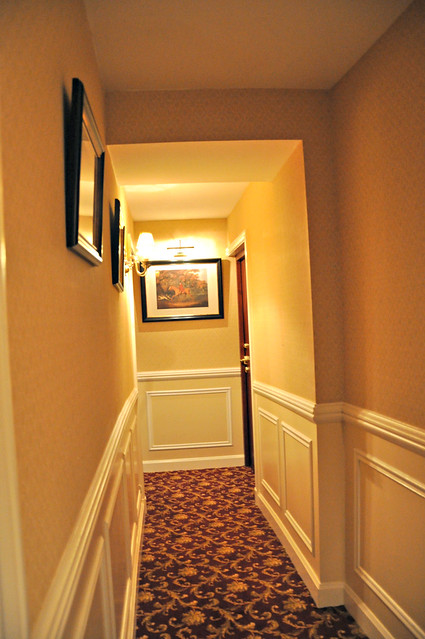
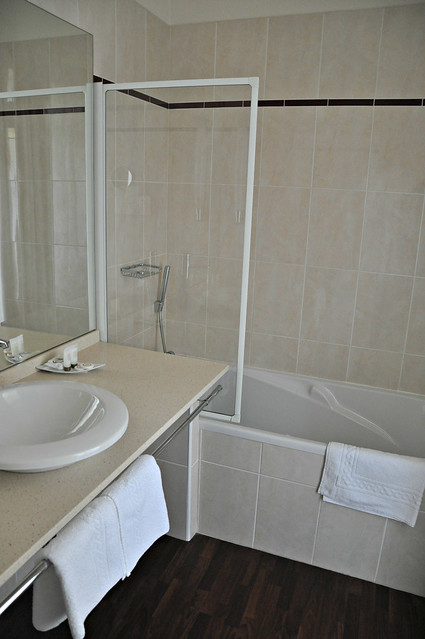
Dormimos apenas uma noite em Biarritz e escolhemos o Hotel Georges VI, uma charmoso hotel a cinquenta metros da Plage du Port-Vieux. Todo o seu interior tem uma decoração de estilo inglês não estivesse o hotel dedicado ao Rei inglês, pai da actual rainha de Inglaterra, Isabel II. A familia real britânica veraneava em Biarritz.
 
We slept only one night in Biarritz and chose the Hotel Georges VI a charming hotel fifty meters from Plage du PortVieux. The entire interior has an English-style decor or wasn’t the hotel dedicated to the English King, father of the current Queen of England, Elizabeth II. The British royal family summered in Biarritz.


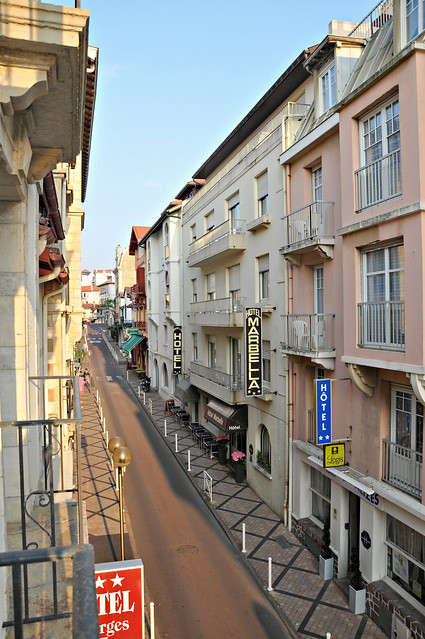
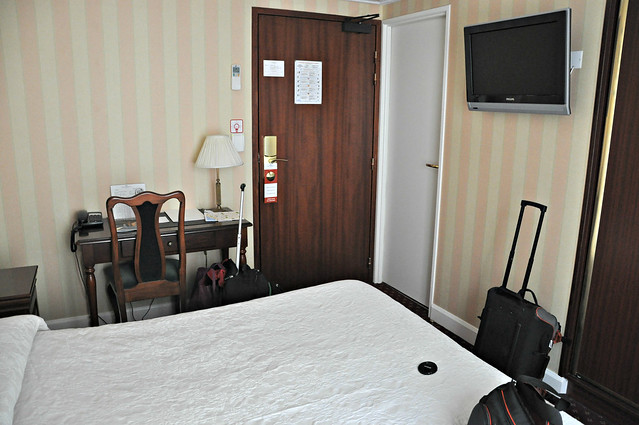
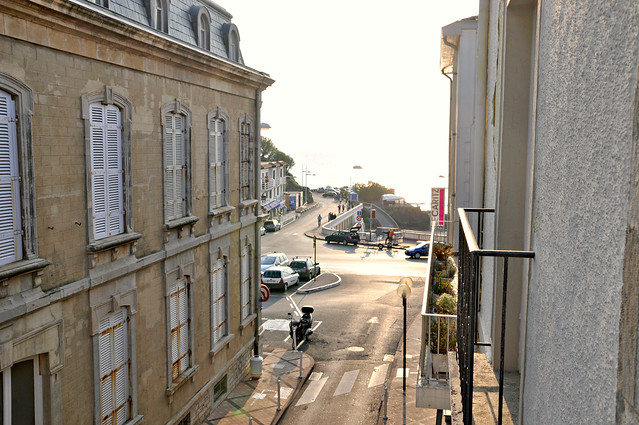
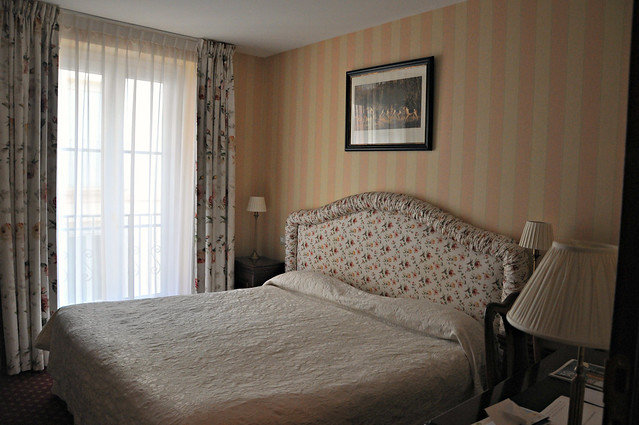
Fomos bem recebidos e apesar de achar que o quarto era pequeno a verdade é que para uma noite estava perfeito, era muito confortável, a decoração simples e romântica. Tínhamos vista para o praia porque ficámos num quarto virado para a rua, têm outros que dão para um pátio interior. A localização era sem dúvida um dos seus pontos fortes porque estávamos também a cinco minutos a pé da Place de Sainte Eugenie e a uns dez da Grande Plage.
 
We felt welcomed and although I think the room was small the truth is that for one night it was perfect, it was very comfortable, with a simple and romantic decor. We had views of the beach because we had a room facing the street, they have others that are facing the inner courtyard. The location was certainly one of its strengths because we were also a five minutes walk from the Place Sainte Eugenie and about ten of Grande Plage.


Morada: Rue du Port Vieux 10
 
Our guide of:
http://hojeconhecemos.blogspot.com/2001/10/guia-de-biarritz.html

do: CATEDRAL SAINTE-CROIX – ORLEÃES, FRANÇA

No dia anterior á nossa visita á Catedral falava ao telefone com uma colega espanhola, quando lhe disse onde estava recomendou-me vivamente a visita a Catedral, disse-me com toda a segurança que para ela estaria nas três catedrais mais bonitas de França. A fasquia estava alta e assim que entramos não decepcionou. Ainda assim o ideal é não ir com demasiadas expectativas, França é um país cheio de grandes e sumptuosas catedrais, cada uma com o seu encanto mas esta tem algo de especial, algo que se sente mais do que se vê. Talvez seja a carga histórica que nos transporta até á Guerra dos Cem Anos e há a emotiva história de Joana d’Arc.
 
On the day prior to our visit to the Cathedral was on the phone with a Spanish colleague when I told her where I was she strongly advised me to visit the Cathedral, told me safely that to her it would be one of the three most beautiful cathedrals of France. The stakes were high and when we got in it did not disappoint. Yet the ideal is not to go with too many expectations, France is a country full of large and sumptuous cathedrals, each with its charm but this has something special, something that feels more than what you see. Perhaps it’s the historical burden that carries us until the Hundred Years War and there is the emotional story of Joan of Arc.


Se é uma das três catedrais mais bonitas de França? Talvez não seja, não viajei o suficiente para responder. Mas entrando na sua nave principal, repleta de luz e cor graças ás decorativas bandeiras, sentimos que sim que é fabulosa.

Podemos também considerá-la como um capítulo de um livro de história, que se refere XV e que conta as aventuras de Santa Joana em forma de vitrais. Podemos ver todos os passos importantes desde as suas batalhas até ao reconhecimento do Rei Carlos VII no Castelo de Chinon.

So is it one of the three most beautiful cathedrals of France? Perhaps not, I have not traveled enough to answer this. But entering its nave, full of light and color thanks to the decorative flags, we feel it is fabulous.
We can also consider it as a chapter in a history book, which refers XV and tells the adventures of Santa Joana in the form of stained glass. We can see all the important steps since her battles to the recognition of King Charles VII in Chinon Castle.


A primeira foi construída no século XIII, no ano de 1429 foi o palco de uma missa onde estava Joana D’Arc. Isto foi durante o cerco á cidade e a sua vitória mudou o rumo da história. Viria ser destruída pelos Protestantes no século XVI e reconstruída um século mais tarde com um estilo gótico. Volta a ser palco de uma guerra, desta vez a II Guerra Mundial que a deixa novamente destruída e só volta a ser aberta na década de 60.

The first was built in the thirteenth century, the year 1429 was the scene of a mass that Joan of Arc attended. This was during the siege to the city and its victory changed the course of history. I would then be destroyed by the Protestants in the sixteenth century and rebuilt a century later with a Gothic style. I becomes once more the stage to a war, this time World War II that again leaves it destroyed and only returns to be opened in the 60s.

Há mais referências ás Guerras Mundiais do século XX, uma delas é um monumento aos soldados (filhos de Orleães) que morreram durante a I Guerra de 1914 a 1918. Junto ao mesmo um outro dedicado a Joana D’Arc, a principal referência da Catedral.

There are more references to the World Wars of the twentieth century, one of which is a monument to the soldiers (children of Orleans) who died during World War I from 1914 to 1918. Close to it another dedicated to Joan of Arc, the main reference of the Cathedral.


do: PLACE BELLECOUR – LYON, FRANÇA

Depois do pequeno-almoço entrámos na Place Bellecour, a sua dimensão é impressionante e é a terceira maior praça de França.
Mas infelizmente a dimensão não chega para impressionar, a verdade é que apesar do belíssimo enquadramento dos edificios da praça, falta-lhe mais arvoredo ou algo que a torne mais agradável principalmente por ser tão grande acaba por se tornar vazia.
Talvez haja um motivo para que assim seja, sabemos que aqui se fazem muitos eventos ao longo do ano e por isso espaço acaba por se tornar mais funcional.

After breakfast we went into the Place Bellecour, it’s size is impressive and is the third biggest square of France.
But unfortunately the size is not enough to impress, the truth is that despite the beautiful environment of the buildings of the square, it lacks more trees or something that would make it more enjoyable mainly because it is so big that eventually becomes empty.
Maybe there’s a reason for it to be, we know that are many events held here throughout the year and the space eventually becomes more functional
.

Na praça está um ponto de turismo e ao centro a principal atracção é a estátua equestre do Rei Luis XIV, o famoso Rei Sol. Na base de estátua outras duas, uma representando o rio Rhône e o Saône. O actual monumento substitui um outro que foi destruído aquando a Revolução Francesa.
Deste ponto já conseguimos ver Fourviére e a sua basílica.
 
In the square there is a tourism office and the main attraction is the equestrian statue of King Louis XIV, the famous Sun King. At the base of the statue there two others representing the river Rhône and the Saône. The current monument replaces another that was destroyed during the French Revolution.
From this point we can already see Fourviére and its basilica.
 
 Our guide of: