Duomo – Siena, Itália

8983845375_1280536587_h

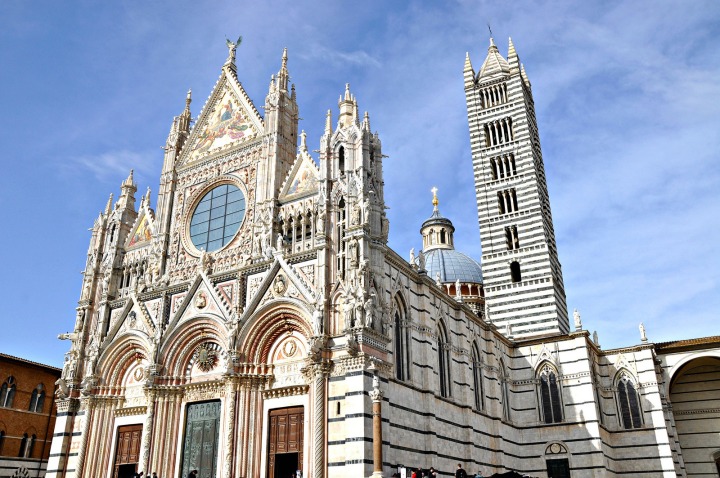
Dentro da grande rivalidade que sempre existiu entre Florença e Siena para mim há uma coisa garantida, o melhor Duomo é o de Siena. Nem sei se são comparáveis, o da primeira cidade é um esplendor por fora e quase uma decepção por dentro (eu sei que embirrei com o Duomo de Florença) mas este pode não impressionar tanto por fora mas não deixa de interessante e quando entras a admiração é tal que acho que aquí sim apanhei o Síndrome de Stendhal. (Atenção este post é longo)

Within the great rivalry that has always existed between Florence and Siena for me there is one thing guaranteed, the best Duomo is the one of Siena. I do not know if they are comparable, the first is all about a splendorous outside and almost a disappointment inside (I know I have been picking on Florence’s Duomo) but this may not impress much on the outside but it is nonetheless interesting and when you enter the admiration is such that here  I think I caught the Stendhal Syndrome. (Please note this post is long).

Continue a ler “Duomo – Siena, Itália”

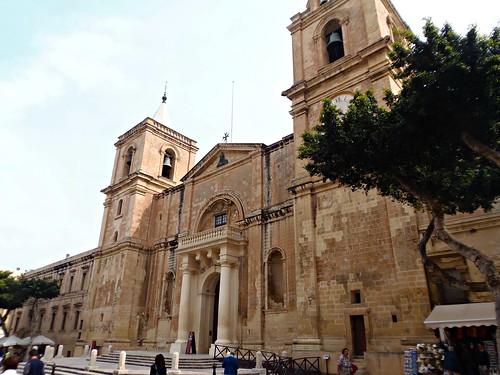
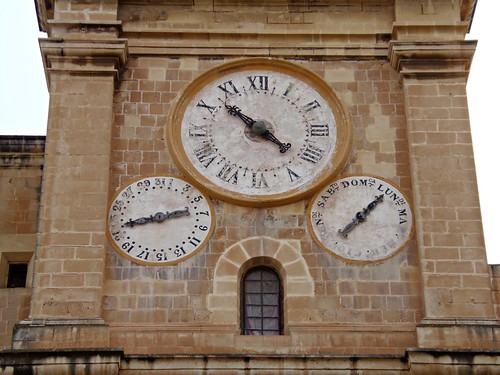
do: CATEDRAL DE S. JOÃO – VALLETTA, MALTA

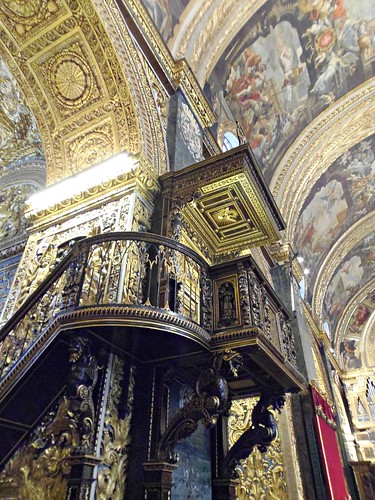
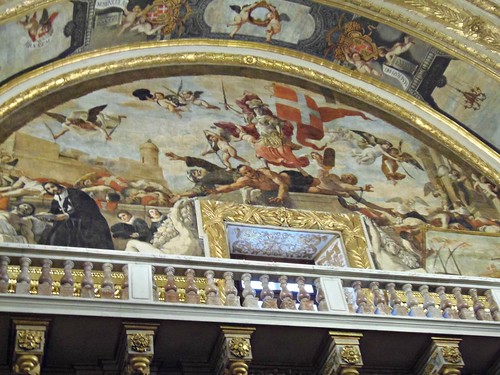
A primeira vez que entrei na Catedral estavam a celebrar uma missa, não podia entrar para visitá-la porque nesses horários não está permitido fazê-lo mas sabia que no dia seguinte seria o primeiro monumento da minha lista. É extraordinária, decorada com um estilo barroco, exagera nos dourados e relembra que estamos onde os cavaleiros da Ordem de Malta passaram.
The first time I entered the Cathedral they were celebrating Mass, I could not go to visit it because at this time you are not allowed to do so but I knew the next day it would be the first monument of my list. It is extraordinary, decorated with a baroque style, it exaggerates in the gold decor and it’s a reminder that we are where the Knights of Malta passed by.

A entrada custa 6€ e tive o azar de coincidir com várias excursões o que complica o tempo que tens para vê-la e porque as capelas são pequenas não pode entrar tanta gente, mas vale sem dúvida a pena visitá-la.
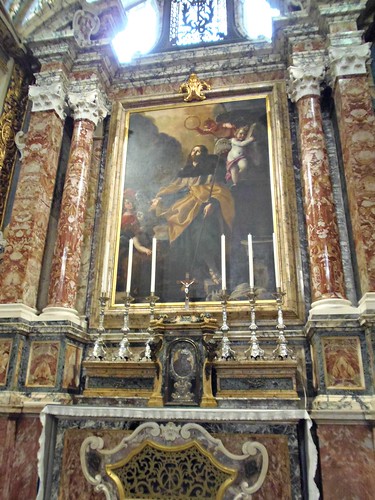
Ia com particular curiosidade de ver os dois quadros de Caravaggio que estão no Oratório. “A Decapitação de S. João Baptista” foi encomendado pelos Cavaleiros da Ordem de Malta ao pintor italiano e das poucas obras que já vi suas esta foi a que mais impressionou, pelo tema e pelo tamanho. Também no oratório está um retrato de S. Jerónimo do mesmo pintor e que podemos ver em réplica numa das capelas.
Inevitávelmente a capela que mais gostei foi a de Portugal (com Castela e Leão), está dedicada ao apóstolo Santiago e onde estão os sepulcros de dois grão-mestre portugueses: António Manoel de Vilhena e Manuel Pinto da Fonseca.
Visitar esta Catedral é conhecer um pouco da essência de Malta e o porquê de ter uma cultura tão diversificada, apesar da sua austera fachada o seu interior é rico em história.
The entrance fee is 6€ and I had the misfortune to coincide with several excursions which complicates the time you get to see it and because the chapels are small they don’t hold many people, but it certainly is worth a visit.
I was going with particular curiosity to see the two paintings by Caravaggio that are at the Oratory. “The Beheading of St. John the Baptist” was commissioned by the Knights of Malta to the Italian painter and of the few works I’ve seen from him this was the most impressive by topic and by size. Also in the oratory there was a portrait of S. Jerome the same painter, and we can see a replica one one of the chapels.
Inevitably the chapel I most enjoyed was that of Portugal (and Castilla y León), it’s dedicated to the Apostle Santiago and it’s where graves of two Portuguese Grand Master António Manoel de Vilhena and Manuel Pinto da Fonseca are located.
To visit this cathedral is to know a bit of the essence of Malta and why it has such a diverse culture, despite its austere facade the interior is rich in history.

Our guide of:
Duomo – Florença, Itália

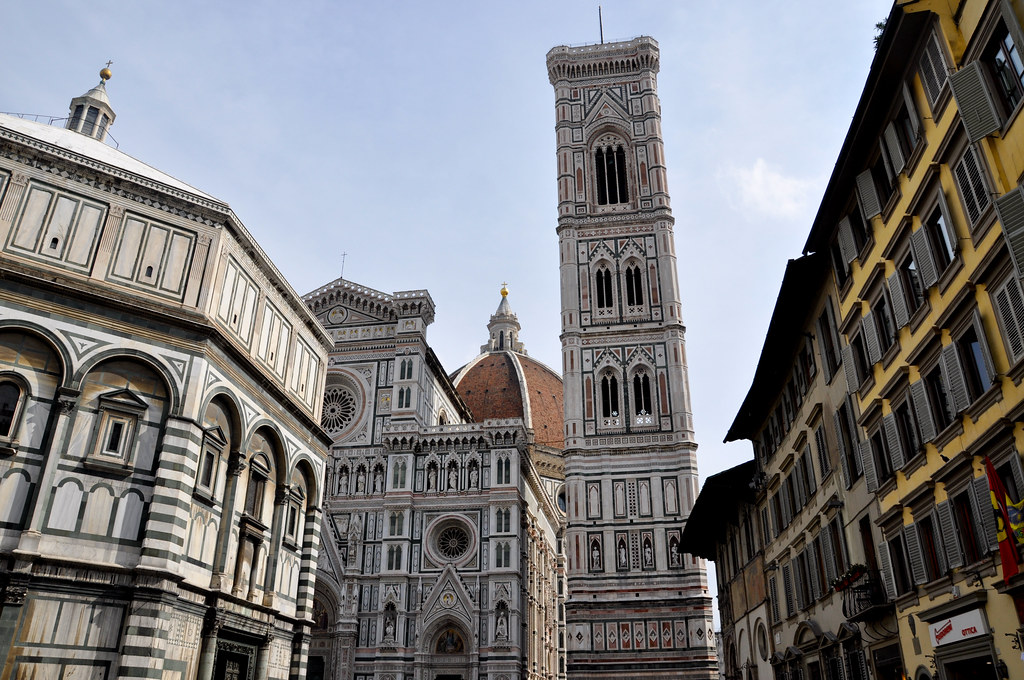
Semana Santa. Chegámos ao hotel, deixámos as malas no hotel e partimos em busca dos primeiros síntomas de Síndrome de Stendhal. Passámos na Ponte Vecchio, fantástica mas o ritmo cardíaco continua normal. Seguimos a multidão em busca do Duomo e assim que vês o seu campanario lá começa o coração a acelerar. Dizem que tamanha beleza pode provocar um desmaio, mas nem o imaginas porque queres aproveitar cada segundo para analizar cada milímetro da mais fantástica obra feita em mármore.
Holy Week. We reached the hotel, we left our bags there and set off in search of the first symptoms of Stendhal Syndrome. We passed on the Ponte Vecchio, it was fantastic but the heart rhythm remains normal. We followed the crowd in search of the Duomo and as son as you see the bell tower the heart starts accelerating. They say that such beauty can cause fainting, but you can’t even imagine it because you want to enjoy every second analyzing every millimeter of the most fantastic work done in marble.

Continue a ler “Duomo – Florença, Itália”

CATEDRAL DE SANTIAGO DE COMPOSTELA, ESPANHA

Dou voltas e voltas a pensar qual o grande encanto de Santiago de Compostela para os que não compartem a fé Cristã. Voltas e voltas a pensar qual é o real interesse da Catedral de Santiago que faz pessoas percorrerem quilómetros e quilómetros a pé para aqui chegarem. Para os que têm fé, para os que acreditam que ali estão na presença de um Apóstolo que comeu ao lado de Jesús Cristos faz todo o sentido e não haverá tantos lugares como este no mundo, mas e os outros?
Eu diría que o mesmo, sejas ou não cristão é impossível ficar indiferente á Catedral e á história que conta, impossível não ter vontade de entrar mesmo arriscando a perder mesa no restaurante que reservámos e nem é das mais bonitas que vimos, mas há todo um respeito e dedicação á sua volta que faz sentir o mesmo.
 
I go round and round thinking what is the great charm of Santiago de Compostela for those who do not share the Christian faith. Round and round thinking what is the real interest of the Cathedral of Santiago that makes people roam miles and miles on foot to reach here. For those who have faith, to those who believe that they are in the presence of an Apostle who ate beside Jesus Christ it makes total sense and there won’t be many places like this in the world, but what about the others?
I would say the same, wether you are Christian or not it’s impossible to remain indifferent to the Cathedral and to the story it tells, impossible not to want to get in even risking losing the table  we booked at the restaurant and it’s not even the nicest we’ve seen, but there is a whole respect and dedication around it that makes you feel the same.

Continue a ler “CATEDRAL DE SANTIAGO DE COMPOSTELA, ESPANHA”

do: CATEDRAL DE SAN SALVADOR – OVIEDO, ESPANHA

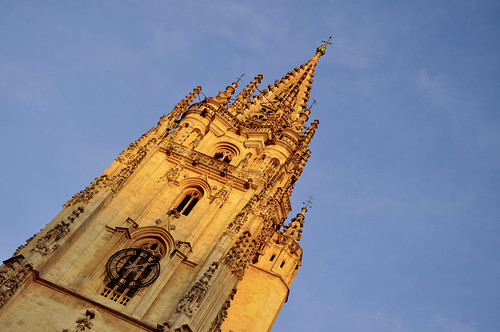
A Catedral de Oviedo é também conhecida como “sancta ovetensis”, dizem que pela quantidade e qualidade de preciosidades que nela se podem encontrar. Uma delas foi declarada Patrimonio Mundial pela Unesco, a Câmara Santa e serve também de panteão para os Reis das Astúrias, entre eles o Rei D. Afonso II, o Casto que ordenou a construção da basílica dedicada a S. Salvador no século IX.
 
The Cathedral of Oviedo is also known as “sancta ovetensis”, they say that  is because of the quantity and quality of gems that can be found in it. One was declared World Heritage by UNESCO, the “Cámara Santa” and it also serves pantheon of the kings of Asturias, among them King Alfonso II the Chaste who ordered the construction of the basilica dedicated to St. Salvador in the ninth century.

 
Por tudo isto e muito mais vale a pena a visita, a entrada é gratuita mas o interior não podemos fotografar porque não é permitido. Para além da Câmara Santa, desta primeira construção do reinado de D. Afonso II sobreviveu ainda a torre de estilo românico.
No século XIV começou a nova edificação da Catedral e demorou três séculos a ficar com o aspecto que podemos ver hoje.
Outra das suas grandes atracções é o retablo da capela maior, feito em madeira representa de forma detalhada as várias fases da vida de Cristo, desde o seu nascimento até á sua morte.

For all this and much more its worth to visit itadmission is free but it’s interior can not photographed it is not allowed. In addition to the Cámara Santa, from this first building the reign of King Afonso II the Romanesque tower also survived.
In the fourteenth century began the construction of the new cathedral and took three centuries to look like we see it today.
Another of its main attractions is the largest altarpiece in the chapel, made of wood represents in detail the various stages of Christ’s life, from his birth until his death.


Junto á fachada principal do lado esquerdo está uma estátua do Rei Afonso II, o Casto. Oviedo foi a cidade que escolheu para ter a sua corte e de ela partiu para combater os mouros.
Não vimos tudo, havia um claustro e um museu mas ficámos apenas pela zona da nave principal e capelas adjacentes.
 
Near the main facade on the left is a statue of King Alfonso II the Chaste. Oviedo was the city that he chose to have his court and from it he left to fight the Moors.
We have not seen everythingthere was a cloister and a museum but we were only in the nave area and adjacent chapels.
 

Our guide of:

http://hojeconhecemos.blogspot.com/2001/11/guia-de-oviedo.html


do: CATEDRAL DE NOSSA SENHORA, LUXEMBURGO

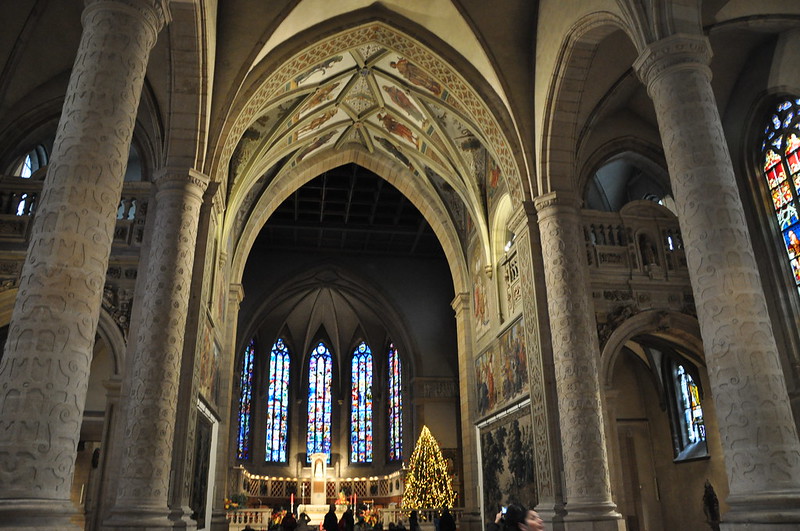
Este mês de Outubro trouxe á ribalta a Catedral de Nossa Senhora no Luxemburgo, foi nela que se casou o Grão-Duque Guillaume do Luxemburgo com a Condessa Stéphanie de Lannoy numa cerimónia onde estiveram presentes membros das várias casas reais como os Duques de Bragança e os Principes das Astúrias. Nós visitámo-la em Dezembro do ano passado quando ainda estava decorada para o Natal.
 
This October brought to the limelight Luxembourg’s Notre-Dame Cathedral, it was in it the the Gran Duke Guillaume of Luxembourg got married with Countess Stéphanie of Lannoy in a ceremony that had the presence of many members of several royal houses like the Bragança Dukes and the Asturias prince and princess. We visited in December of last year when it was still decorated with a Christmas motif.

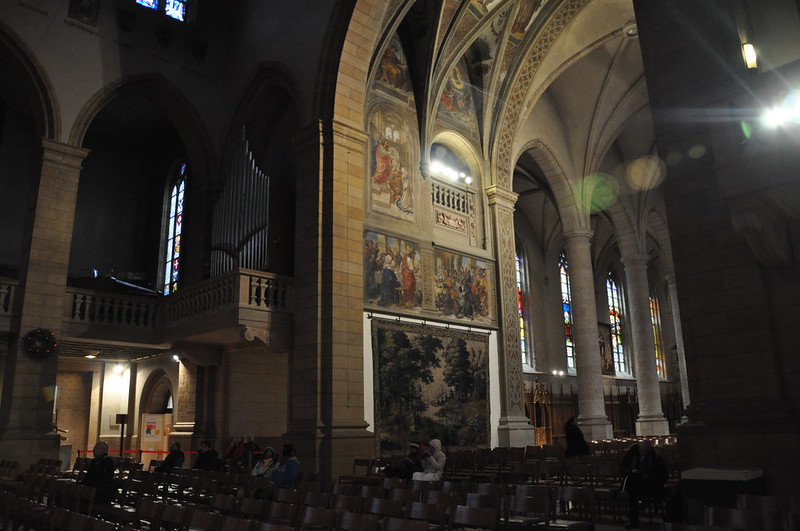
A primeira construção data do século XVII como parte de um colégio de jesuítas, no século XVIII depois dos jesuítas abandonarem o Luxemburgo, a Imperatriz Maria Teresa entrega a igreja á cidade passando a ser dedicada a S. Nicolau e S. Teresa. Só no século XIX se torna Catedral. O seu estilo é maioritáriamente gótico, com alguns apontamentos do renascimento.
A figura central da Catedral é a santa padroeira da cidade, a nossa senhora Maria Consolatrix Afflictorum (Consoladora dos Aflitos) cuja imagem está no seu interior e as suas vestes não são pintadas mas feitas em tecido. A peregrinação pela santa é feita do 3º ao 5º Domingo de Páscoa. Não é a catedral mais bonita que vimos, talvez a riqueza do Luxemburgo fizesse pensar que seria mais esplendorosa mas tem alguns elementos interessantes e não há dúvida que no Natal com as decorações e o presépio torna-se mais acolhedora.
 
The first construction is from the XVII century and was part of jesuit school, after they left the Luxembourg in the XVIII century, Empress Maria Therese gives the church to the city and it was dedicated to St. Nicholas and St. Teresa. Only in the XIX it becomes a Cathedral. It’s style is mostly gotic with some renaissance elements.
The central image of the Cathedral is the city’s patron saint, our lady Maria Consolatrix Afflictorum (Conforts the needy) whose sculpture is dressed with fabric instead of being painted. The pilgrimage dedicated to her is on the 3rd and 5th Easter Sunday. It’s not the most beautiful cathedral we saw, maybe the riches of Luxembourg would made you think that it would be more splendid but it does have some interesting elements and without a doubt it is more cozy with the Christmas decorations and Nativity set.


Mais/More Posts:

Catedral de San Pietro – Bolonha, Itália

Percorríamos a Via da Independência quando vimos a grande fachada de uma igreja e decidimos entrar. Tínhamos ido até Bolonha sem mapa, sem referências, sem nada…íamos á descoberta e foi assim que encontrámos a catedral da cidade, passeando casualmente por uma rua…Ao entrar percebemos que afinal era mais que uma igreja era a Catedral de Bolonha dedicada a São Pedro.

We walked the Via de la Independencia when we saw the great facade of a church and decided to enter. We had gone to Bologna without a map, without references, without anything … we went to the discovery and that is how we found the cathedral of the city, strolling casually along a street … On entering we realized that after all it was more than a church was the Cathedral of Bologna dedicated to Saint Peter.

Continue a ler “Catedral de San Pietro – Bolonha, Itália”

Catedral N.S. de Pilar – Zaragoça, Espanha

Apenas na nossa segunda visita a Zaragoça conseguimos ver o interior da famosa Catedral-Basílica de Nossa Senhora del Pilar de Zaragoça.
A sua construção começou no século XVI, de estilo barroco (considerado o maior monumento do género em Espanha) distingue-se pelas suas cúpulas decoradas com coloridos azulejos.
Only on our second visit to Zaragoza we were able to see the interior of the famous Cathedral Basilica of Our Lady Pilar.
It’s construction started in the XVI, built in a barroque style (considered one of the biggest monuments of this style in Spain) it’s distinguished by it’s colorful tiled decorated domes.

Continue a ler “Catedral N.S. de Pilar – Zaragoça, Espanha”

DUOMO, PÁDUA, ITÁLIA

O seu outro nome é Basilica Cattedrale di Santa Maria Assunta e foi construída a meio do século XVI, mas na realidade nunca ficou completa. Só no século XVIII chega a ser consagrada. O desenho original foi encomendado a Miguelangelo mas foram Andrea Da Valle e Righetto Agostino que o levaram a cabo alterando o projecto inicial.

Ficou por concluir a fachada que hoje em dia assume este ar menos apelativo principalmente quando ao seu lado está o baptistério com um estilo românico do século XII e que guarda nele os frescos desenhados Giusto de Menabuoi, que infelizmente não chegámos a visitar.

O seu interior divide-se em três naves de decoração simples, ao percorrer a principal podemos ver duas cúpulas que permitem mais entrada de luz.

Não entrámos pela entrada principal mas sim por uma lateral, antes contornámos toda a catedral e isso permitiu-nos ver os vários detalhes da sua construção, incluindo a torre. 

No seu interior tivémos pouca margem de manobra para movimentar-nos, estava a decorrer a missa e tivémos que esperar para fotografar mas mesmo assim muitos ficaram a cumprimentar o padre e a catedral estava cheia de gente.  

Ainda assim pudémos ver as capelas das naves laterais, ainda que em pontas opostas pudémos ver tanto numa como noutra dois retratos de Nossa Senhora com o Menino Jesus, duas interpretações diferentes, a última dizem ser uma cópia de uma criada por Giotto. 


PÁTIO DE LOS NARANJOS CATEDRAL – CÓRDOBA, ESPANHA

Quando visitámos a cidade de Córdoba foi numa das datas de maior afluência de turistas á cidade: a festa dos pátios em Maio. Além disso fomos a um casamento assim que o nosso tempo era limitado, foi impossível visitar o interior da Catedral e da famosa Mesquita de Córdoba ficámo-nos pelo seu pátio, o que chamam de los Naranjos.

As laranjeiras seriam por isso as estrelas do pátio mas todo o seu entorno e arquitectura já suficiente para se perder algum tempo a explorá-lo.

Continue a ler “PÁTIO DE LOS NARANJOS CATEDRAL – CÓRDOBA, ESPANHA”